
Last updated November 14, 2026
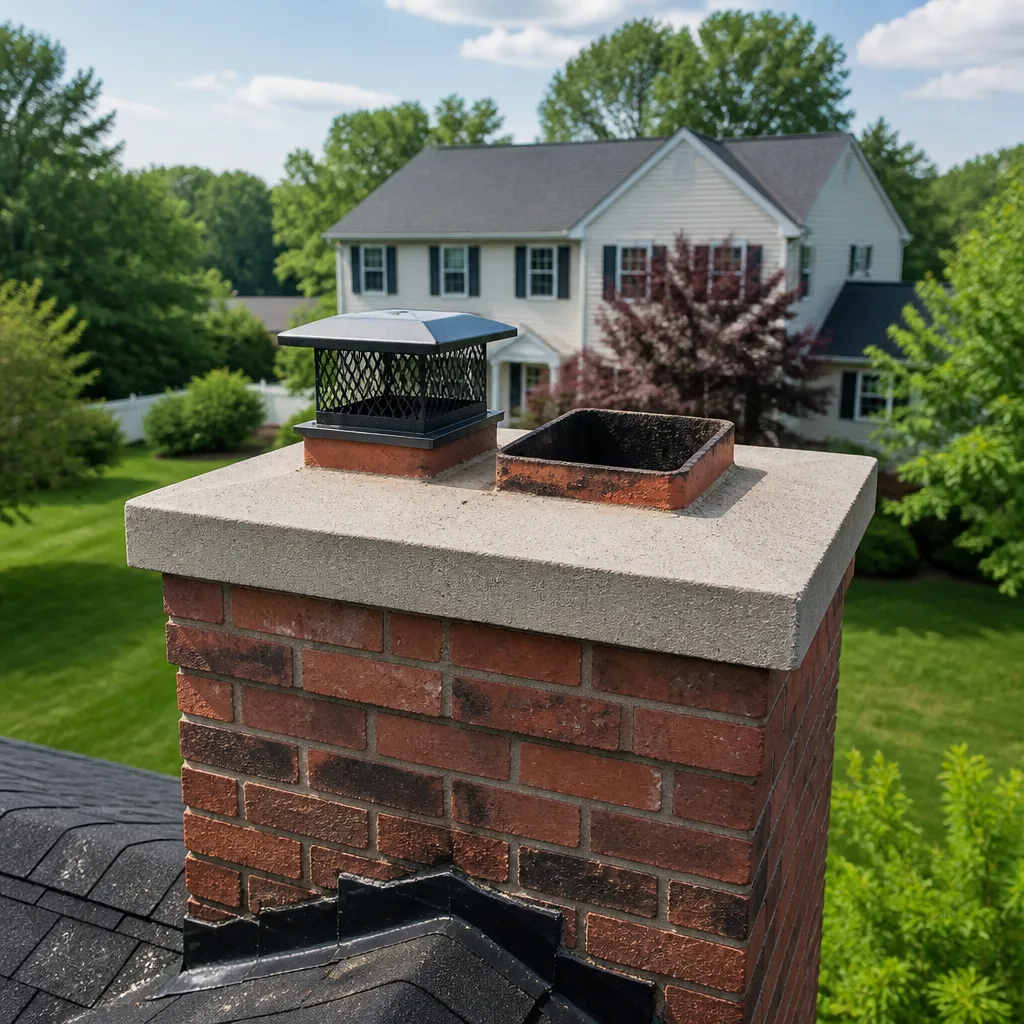 Sweep & inspection
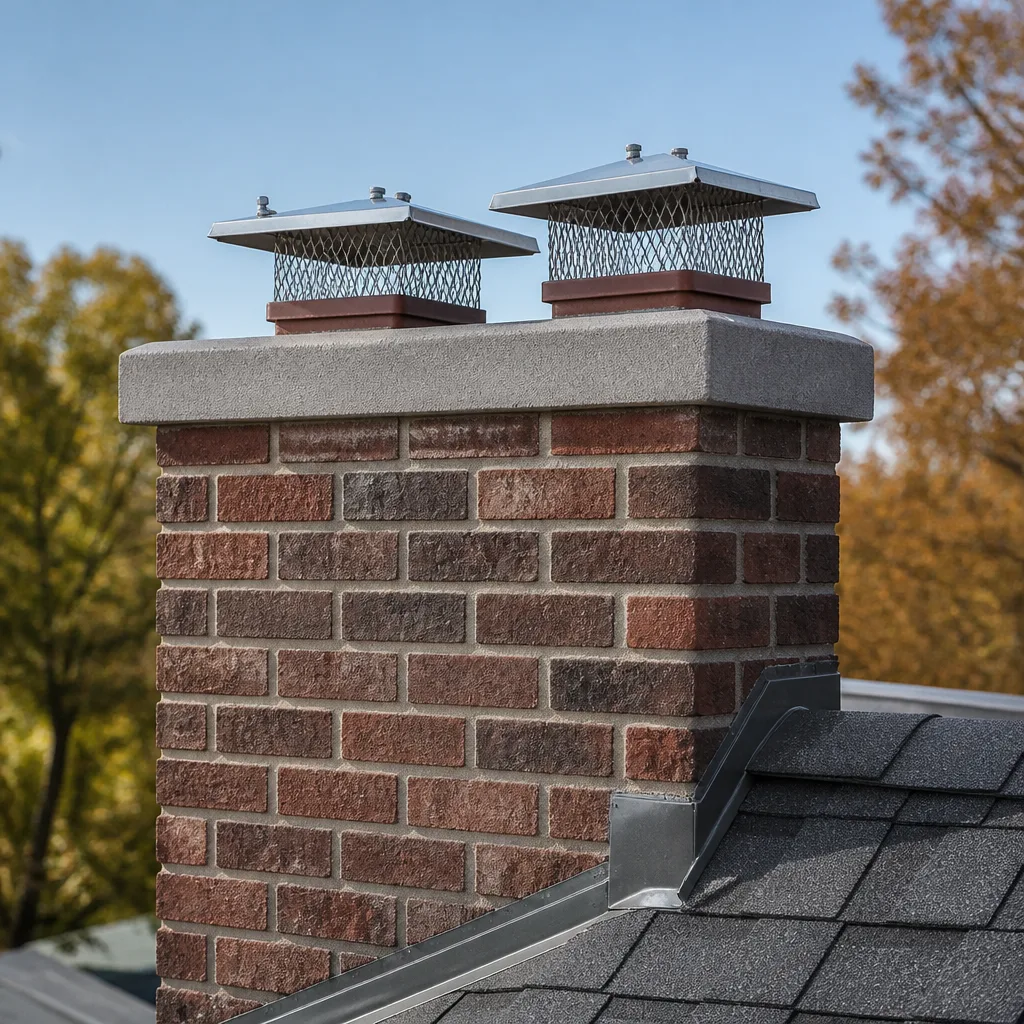 Caps & crowns
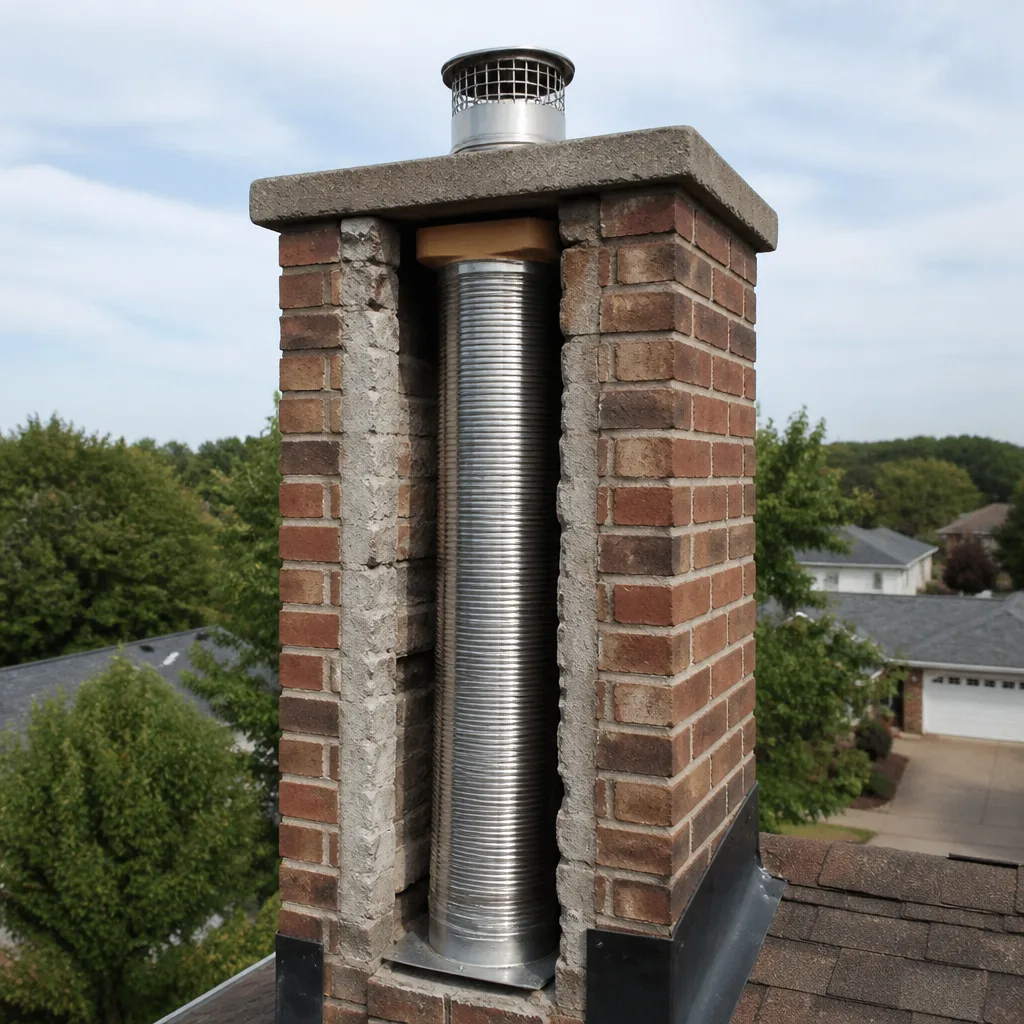 Flue relining
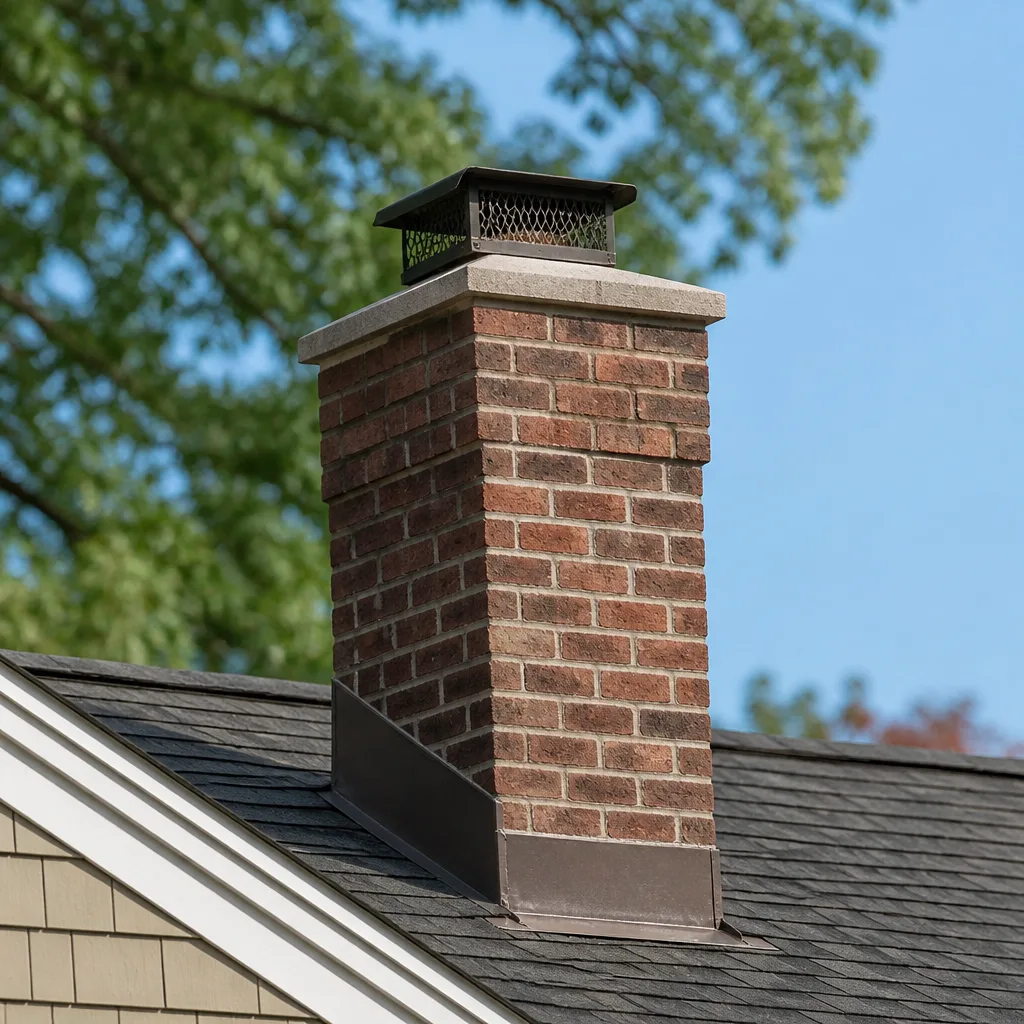 Masonry repair
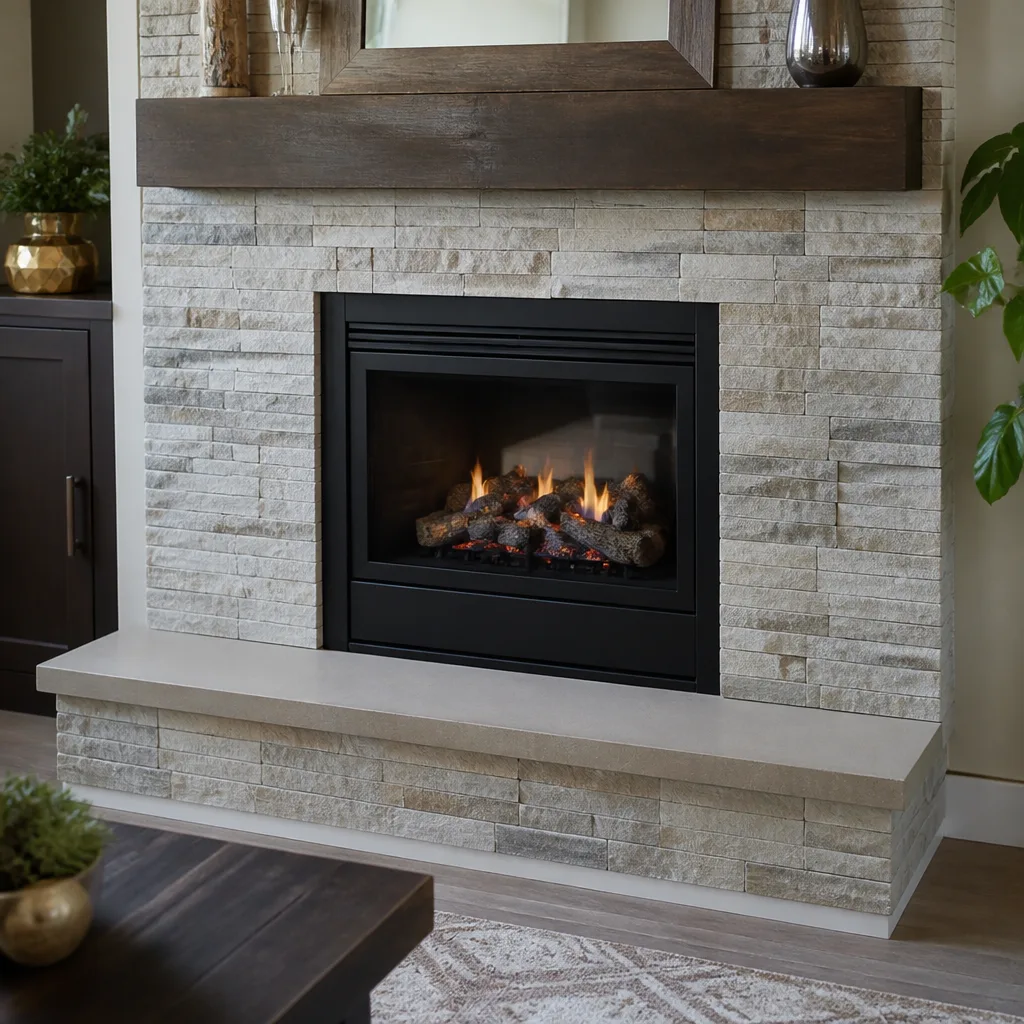 Gas fireplace service
Level 1 sweep and inspection to the NFPA 211 annual standard - flue, crown, cap, and flashing checked and photographed
Chimney sweep logs do not sweep chimneys. They loosen some creosote - which then falls where a brush and vacuum still have to collect it.
Chimney Cleaning Emergency Preparedness Guide for Wichita Falls Homes
A chimney fire sounds like a low roar, a distant train, or a pack of bees depending on who you ask. What surprises people is the rest of it: a flue fire can reach 2,100°F within 60 seconds of ignition, and most homeowners have never been told that closing the damper, not opening it, is the correct first move. Two minutes of the wrong response can decide whether the fire stays in the flue or reaches the structure of your home. This guide covers the gap between “something is wrong” and “the professional arrives” for Wichita Falls homeowners, including chimney fire response, carbon monoxide recognition, blockage events, a pre-season emergency kit, and how to document damage before cleanup begins.
Quick Answer
In the first ten minutes of a suspected chimney fire, get everyone out of the house, call 911, close the damper and the firebox glass, and put no water on the fire. For carbon monoxide, leave the house at the first sign of symptoms and treat any backdraft at the fireplace as a possible flue problem. For a sudden blockage, put the fire out if smoke is rolling back, then wait for a professional inspection before you light anything again.
Styles & brands we work with
- Sweep & inspection
- Caps & crowns
- Flue relining
- Masonry repair
- Gas fireplace service
Table of Contents
- What Do You Do in the First Ten Minutes of a Chimney Fire?
- Why Closing the Damper Is the Right Move (and Opening It Is Not)
- How Do You Tell Carbon Monoxide From Smoke Inhalation?
- How Do You Catch a Blocked Flue Before You Light a Fire?
- What Do You Do When Smoke Starts Rolling Into the Room?
- What Belongs in a Wichita Falls Chimney Emergency Kit?
- What a Chimney Fire Suppressant Log Actually Does
- How Do You Document Damage Before Cleanup Begins?
What Do You Do in the First Ten Minutes of a Chimney Fire?
If you suspect a chimney fire, the correct first ten minutes are about containment, evacuation, and getting fire services on the way. You are not trying to put the fire out. You are trying to keep it in the flue until trained responders arrive. Here’s the sequence we walk every customer through.
- Get everyone out. Including pets. This comes before anything else on this list. If you have to choose between evacuating and saving property, evacuate.
- Call 911 from outside. Tell the dispatcher you suspect a chimney fire and give your full address. Even if the fire seems to have died down, call – a flue fire can reignite in the same event.
- Close the firebox glass doors if they’re open. This limits oxygen feeding the fire.
- Close the damper. This is the step most people get wrong. More on that in the next section.
- Do not put water on the fire. Water on a hot flue can cause a steam explosion or crack the liner. Leave suppression to the fire department.
- Stay out of the house until the fire department clears it. Even if you see no flames, wait.
- Note the time and what you observed. Sounds, smells, visible smoke density. You’ll need this for your insurance claim and for the inspection that follows.
In our experience, the homeowners who handle chimney fires well are the ones who rehearsed the sequence once – out loud, with the family – before anything ever happened. That rehearsal is the difference between panic and protocol when the flue starts roaring. If you heat with wood in Wichita Falls, this is worth ten minutes of your evening once a year.
Why Closing the Damper Is the Right Move (and Opening It Is Not)
Closing the damper during a chimney fire starves the fire of the oxygen it needs to climb the flue and limits how much heat reaches the surrounding framing. Opening it does the opposite. This single piece of knowledge is the one we wish every Wichita Falls homeowner carried in their head.
Here’s the logic. A fire at the bottom of a vertical flue creates a draft – hot air rises fast, and the flue acts like a chimney-shaped vacuum. Once that draft is established, opening the damper feeds the fire, pulls more heat upward, and pushes the flue toward the temperatures where tile liners crack and nearby wood ignites.
What “closing the damper” means in practice
- Wood-burning fireplaces: the metal plate above the firebox. Pull the handle toward you to close it.
- Wood stoves: close the primary air control on the stove body, then the flue damper if the stove has one.
- Gas inserts: turn the unit off at the wall switch or remote, then close the damper if it’s manually operated.
What you don’t want to do is leave the damper open while you stand around looking for your phone. That’s the response that turns a contained flue fire into a house fire. The safest procedure, if you’ve already evacuated, is to let the fire department manage the damper – but if the fire is small and you’re still inside and the flue is where the trouble is, close it before you head for the door.
A dirty flue makes a chimney fire much more likely in the first place, which is why a pre-season chimney sweep matters more than most homeowners think. Creosote buildup is the fuel source.
How Do You Tell Carbon Monoxide From Smoke Inhalation?
Carbon monoxide from a fireplace system causes headache, dizziness, nausea, confusion, and fatigue with no smoky smell, while smoke inhalation causes coughing, throat irritation, eye watering, and visible smoke in the room. If you’re wondering which one you’re dealing with, the answer is to leave the house either way.
The reason is that CO exposure at home, without a working alarm, gives you no warning. It doesn’t smell or look like anything. The symptoms mimic flu and mild food poisoning. People lie down. That’s the mistake.
CO symptoms versus smoke symptoms
- Carbon monoxide: headache, fatigue, dizziness, nausea, confusion. No cough, no eye irritation, no visible smoke. Symptoms ease when you go outside, return when you come back in.
- Smoke: coughing, burning eyes, throat pain, dark or visible smoke. You can see the smoke.
- Both together: the response is the same – evacuate, then call 911.
When the fireplace itself is the source, the most common cause we find is negative pressure inside the home pulling exhaust back down the flue. A cracked liner, a bird nest, a soot fall, or a chimney with a blocked termination can all create backdraft. Our technicians look for these with a camera inspection during every visit – photo evidence included, so you can see what we’re seeing.
If you’ve had symptoms in the house and you can’t trace the cause, treat the fireplace as suspect until it’s been inspected. Call (855) 705-9859 and we can get a camera inspection on the calendar. We answer 24/7.
How Do You Catch a Blocked Flue Before You Light a Fire?
A blocked flue usually gives you three signals before you ever strike a match: a draft that pulls air down instead of up, a smell of soot or animal debris in the firebox, and a fire that lights poorly or smokes back into the room within the first minute. Catch those, and you don’t get the fourth and worst signal – smoke rolling into a room where the fire has already been burning.
Here’s a pre-light check any Wichita Falls homeowner can do in 30 seconds:
- Open the damper and look up with a flashlight. You should see daylight at the top or at least an open flue with no visible obstruction.
- Hold a lit match near the open firebox. The smoke should be drawn straight up the flue. If it stands still or swirls into the room, the flue is blocked or badly drafting.
- Listen and smell. Wind, animal noise, or a soot smell are all reasons to stop and get the chimney checked.
- Check the exterior termination. From outside, is the chimney cap intact? Are there branches, nests, or debris sitting on the screen?
One of the most common causes in Wichita Falls is a bird or squirrel nest in the flue, especially in fall when the chimney reads as sheltered real estate. The second is a soot or creosote fall from a flue that needed cleaning last season. Both are easy to miss until you’ve built a fire on top of them. If you’re not sure, the safe call is to have the chimney inspected before the first fire of the season. Booking a Lionheart Chimney Sweep inspection is one call, and it gives you a real answer instead of a guess.
What Do You Do When Smoke Starts Rolling Into the Room?
When smoke enters a room, the first move is to get the people out, the second is to stop feeding the fire, and the third is to figure out why the flue was blocked. Do not open windows to “clear the smoke” – that can worsen the pressure imbalance that pulled the smoke into the room in the first place.
A quick sequence to run in your head:
- Get everyone into a room on the other side of a closed door, ideally out of the house. Smoke inhalation is the common danger here, not the fire itself.
- Don’t open the firebox. Leave the glass doors closed if the fireplace has them.
- Don’t dump water on a fire that’s smoking heavily. Steam is worse than smoke to breathe, and a hot firebox plus cold water is a crack risk.
- Wait for the fire to die down and the smoke to clear before you investigate the flue condition or call us. The fire itself has to be out.
- Book an inspection. Nothing gets lit again until someone trained has looked up the flue.
Sudden smoke events have a handful of root causes: a nest, a soot fall, a cracked liner that shifted under heat, or negative pressure from a bath fan or kitchen exhaust pulling two ways at once. If the smoke event happens every time you light a fire, the cause is almost always physical – something in the flue. If it only happens now and then, pressure dynamics are just as suspect. Either way, the answer is inspection, not another fire.
What Belongs in a Wichita Falls Chimney Emergency Kit?
A chimney emergency kit holds the handful of items that matter in the first ten minutes and during the days that follow. Keep it physically near the fireplace so you’re not hunting through the kitchen junk drawer when the flue starts roaring. Ours is short and practical.
- A working carbon monoxide alarm, tested monthly. This is the single most important item on the list. Without it, CO exposure has no warning.
- A charged phone you know where to find. In an emergency, no one wants to be searching under couch cushions.
- A small flashlight for the pre-fire draft check and for the inspection that follows smoke events.
- A chimney fire suppressant log, stored near the firebox. (More on this in the next section.)
- A fire extinguisher rated for wood and electrical fires, stored at a known location outside the fireplace wall, not in the room where the fire is.
- A printed evacuation plan and a family meeting point. Ten seconds of panic is enough to forget your own address when you call 911.
- A small envelope with your home insurance policy number and phone line, and the number for your chimney professional. This is the one most people skip and end up wishing they hadn’t.
Wichita Falls homes that heat primarily with wood tend to need a longer, more thorough kit than gas insert homes, because the firebox itself is the source of ignition and creosote load. Gas insert homes still need the CO alarm and flashlight – especially the alarm.
What a Chimney Fire Suppressant Log Actually Does
A chimney fire suppressant log is a first-response tool, not a maintenance product. It is designed to be dropped into an active, still-burning fire to help knock down a chimney fire from the flue side, before fire services arrive. Using it as routine “cleaning” is the wrong tool for the wrong job – a sweep doesn’t get out of date because you burned a log.
How a suppressant log works: when the package is lit and the log dropped into a burning firebox, the compounds it releases rise up the flue and coat the inside of the chimney, cutting oxygen and smothering the flue fire. It’s a spray from the inside. It doesn’t eliminate creosote, doesn’t inspect anything, and doesn’t fix liner damage that’s already there.
When to use it and when not to
- Use it: a fire is actively burning in the firebox and you suspect the flue has caught fire, and fire services are on the way.
- Don’t use it: as a substitute for a sweep, as a pre-season “insurance policy,” or in a firebox you’ve already extinguished.
- Don’t rely on it: as your only line of defense. It’s a supplement to evacuation and 911, never a replacement.
We’ve seen aggressive chimney fire suppression products advertised as annual maintenance. They aren’t. Regular sweeping with a trained technician and a proper visual inspection is the actual maintenance. The suppressant log is stored next to the fire extinguisher, checked once a season, and replaced before it expires.
How Do You Document Damage Before Cleanup Begins?
Documentation happens before any cleanup: photo the firebox, the flue opening from inside, the exterior chimney, the room, and any belongings affected by smoke. Then write down the timeline. Do this before you touch a broom, before the fire department packs up, and before any sweep work begins. In our experience, this is the single step most often skipped, and the one most often regretted.
Here’s what to preserve and record:
- Photograph from multiple angles. Inside the firebox, up the flue with a flashlight, exterior chimney top and sides, the room, the ceiling above the fireplace, and any damaged contents.
- Photograph any smoke staining on walls or ceiling. These are the details insurance adjusters and damage assessors rely on.
- Write down the timeline: the time the fire was noticed, the time the fire department arrived, how long the flue fire burned, and when you first smelled or saw smoke in the room.
- Preserve any physical evidence. Don’t sweep out the firebox, don’t scrub walls, don’t throw away the suppressant log wrapper. Both fire investigators and adjusters want the original state.
- Get the fire department’s incident report number. It’s usually given to you before they leave and it’s the anchor for any subsequent claim.
- Get a professional camera inspection report before repair decisions. Photo evidence of the flue in its post-event condition, with liner status called out, is the document that settles “is this damage covered” conversations with insurers.
If you need a chimney inspection in Wichita Falls after a smoke event, we bring a camera, take photos, and hand you a written read on the flue’s condition – not a recommendation with nothing behind it. We repair what we find, in-house, using professional materials, and we tell you plainly when something can safely wait. Call (855) 705-9859 for a free estimate. We answer 24/7. Fast dispatch from 7am to 7pm, Sunday through Friday.
Common Mistakes to Avoid
- Opening the damper during a flue fire. It feels intuitive – more air up the chimney – but it feeds the fire and drives temperatures higher. Close it.
- Waiting for the fire to die down before calling 911. A chimney fire can look extinguished and reignite minutes later. Call when you first suspect it, not afterward.
- Burning suppressant logs as yearly maintenance. They’re first-response tools. The maintenance is the sweep.
- Cleaning up before photographing. Smoke staining, firebox condition, and the flue all need to be documented in the state the event left them in.
- Lighting a fire after a smoke-in-the-room event without an inspection. Nine times out of ten, the cause is physical and it’s still in the flue. Every homeowner who lit again without a camera check wishes they hadn’t.
- Attributing headaches to “just the house being stuffy.” If symptoms ease outdoors and return in the house, treat CO as a suspect until an alarm and an inspection rule it out.
- Skipping dryer vent cleaning. We see it constantly – the dryer vent is a fire-safety component just like the chimney, and most homeowners wait until the dryer stops drying well. That’s usually months after the vent should have been cleaned.
See the difference
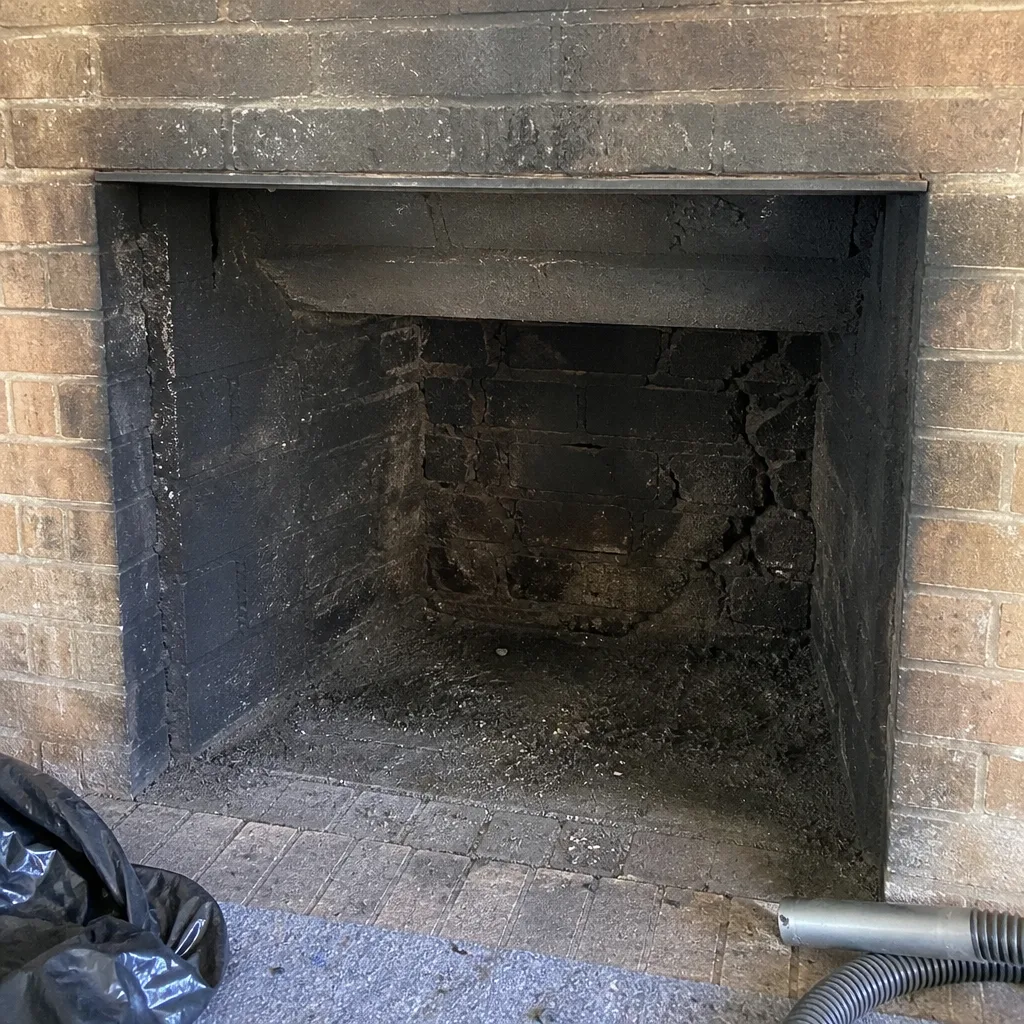 Before
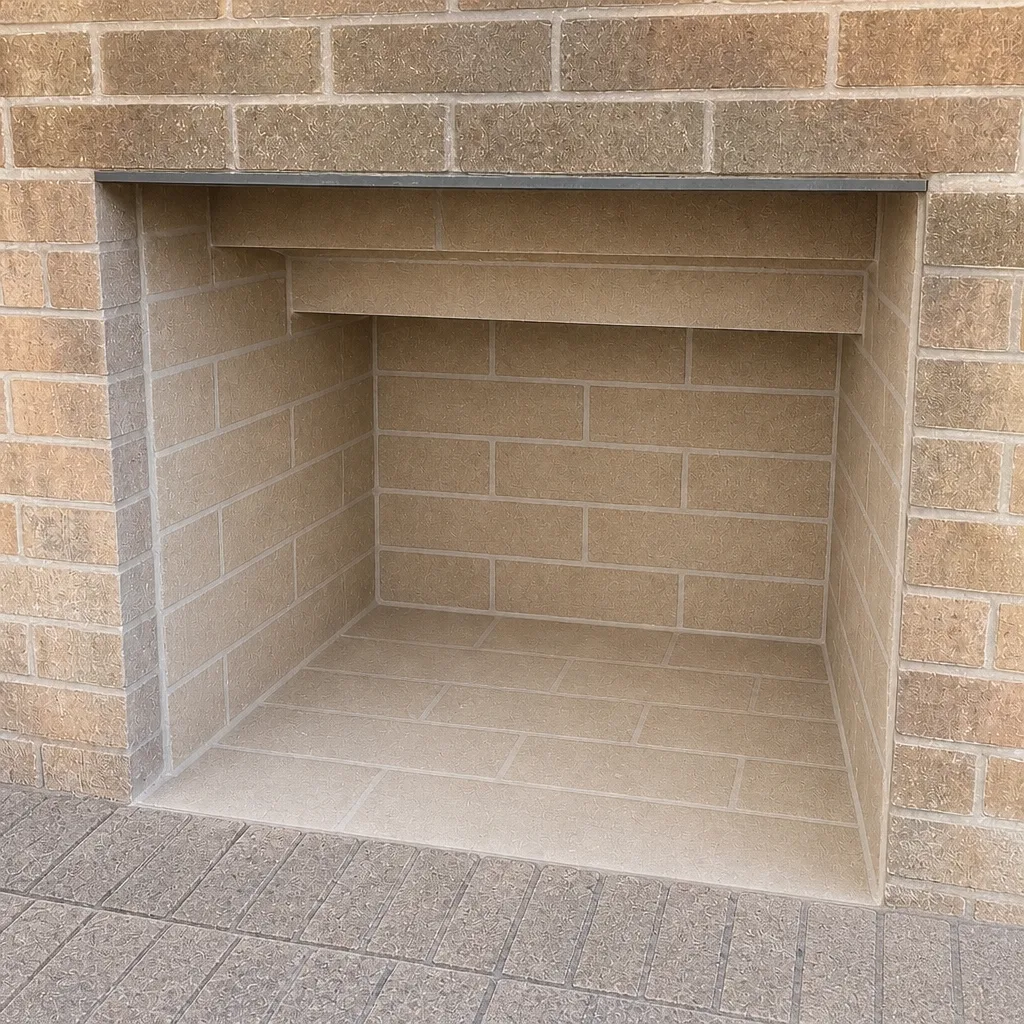 After
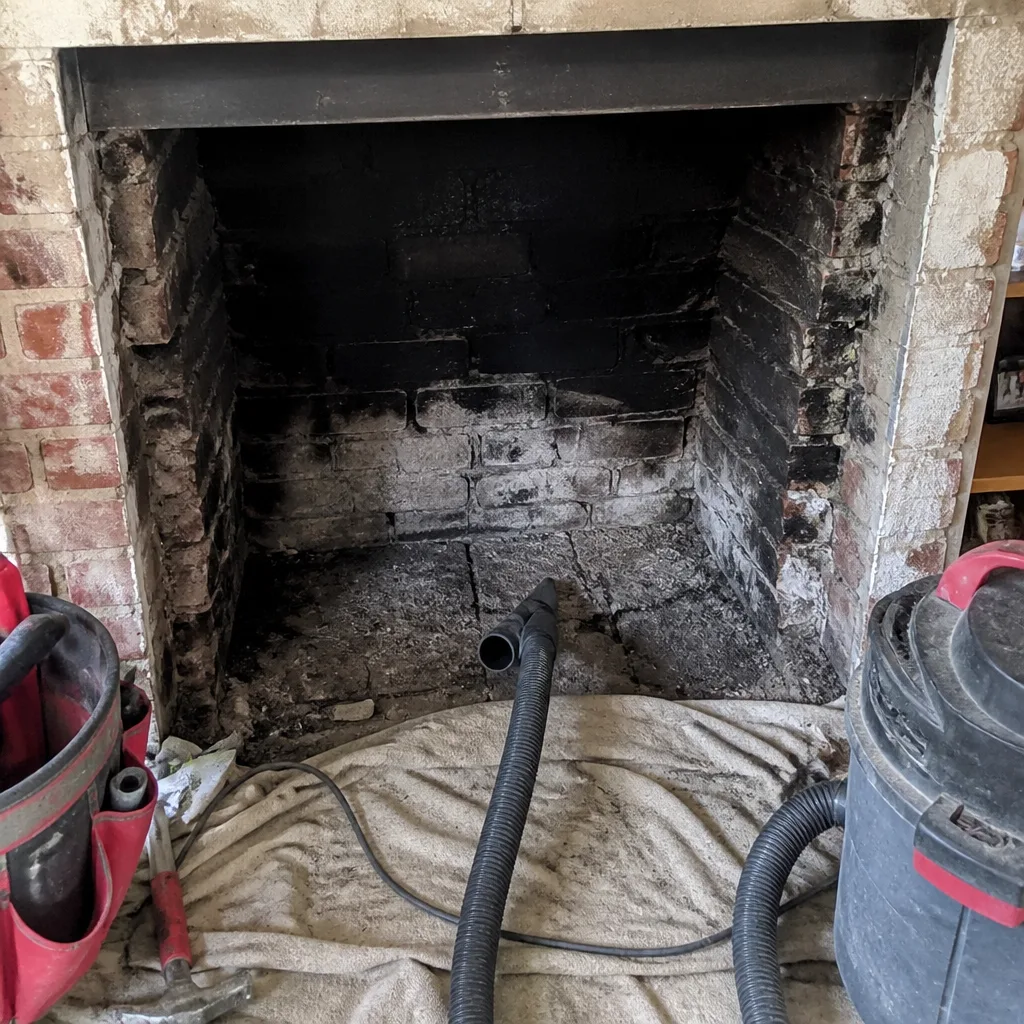 Before
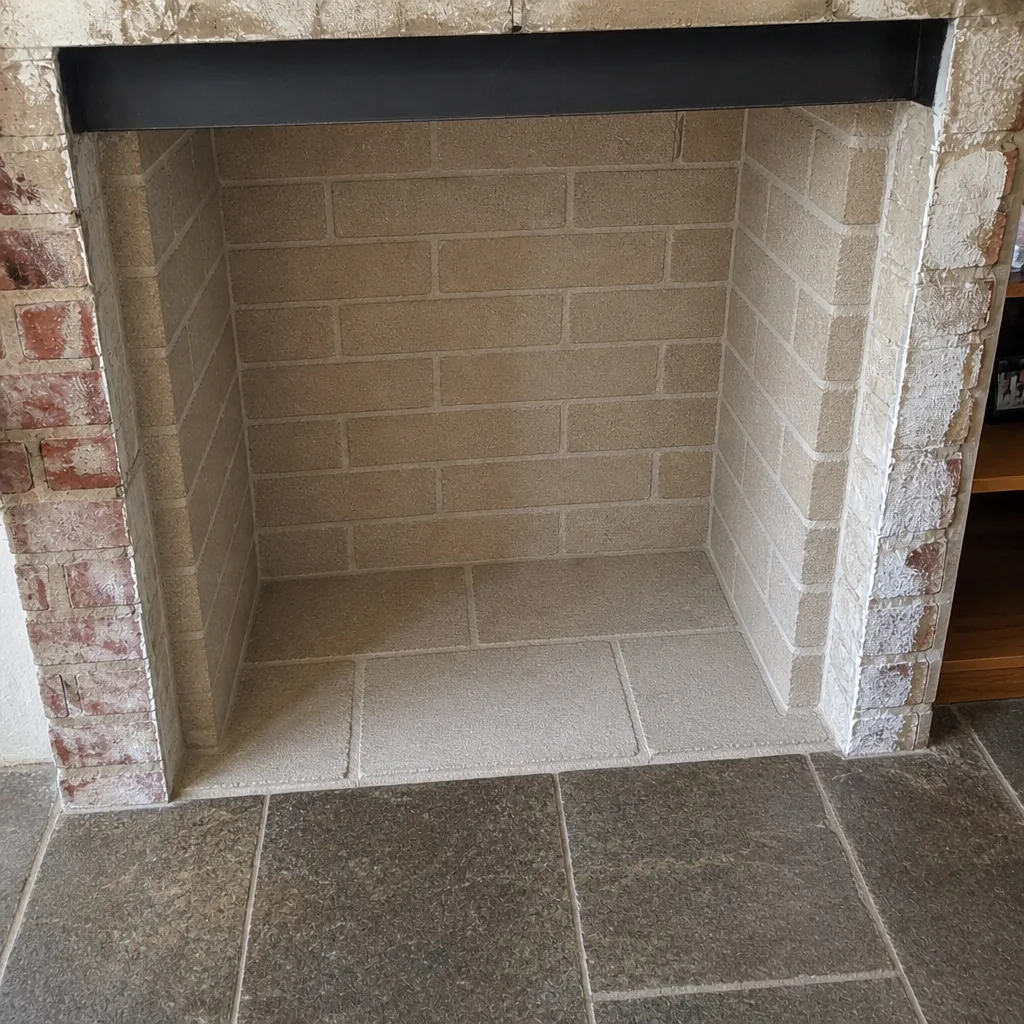 After
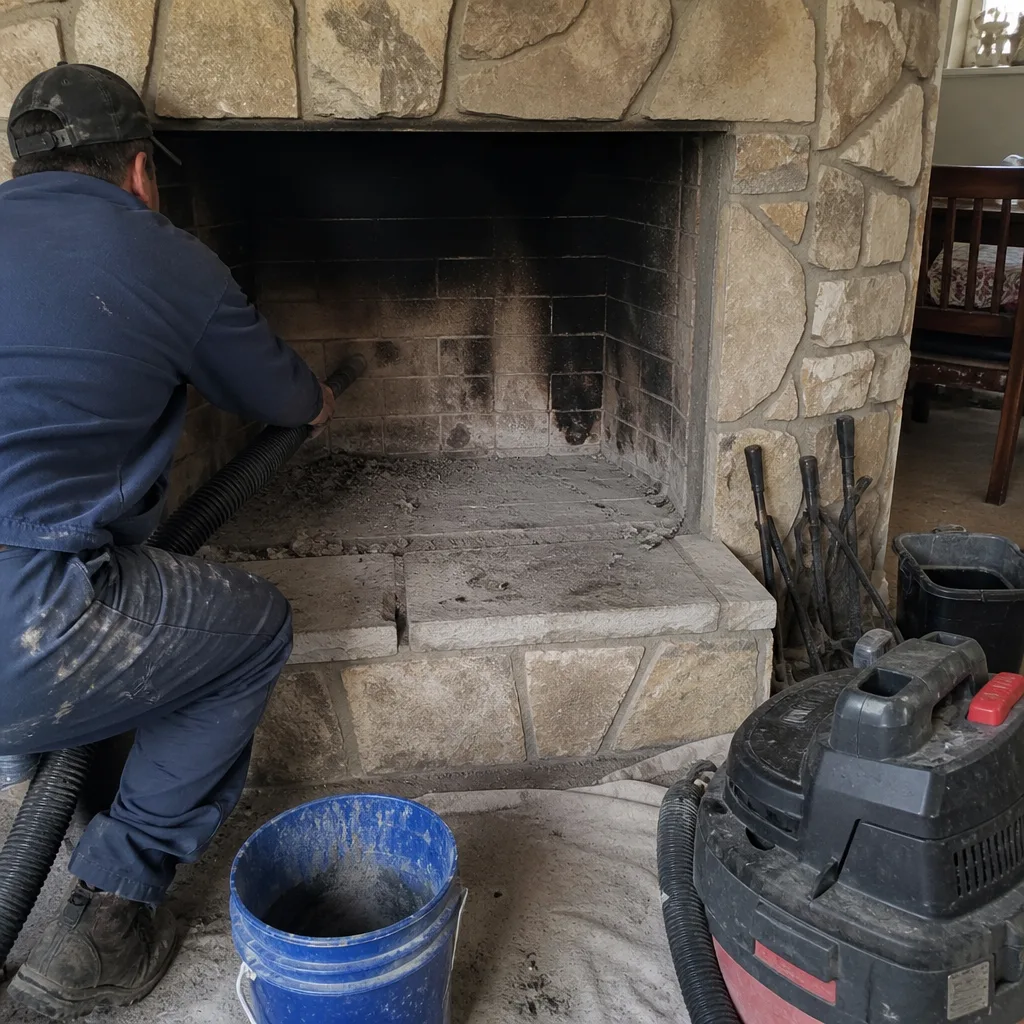 Before
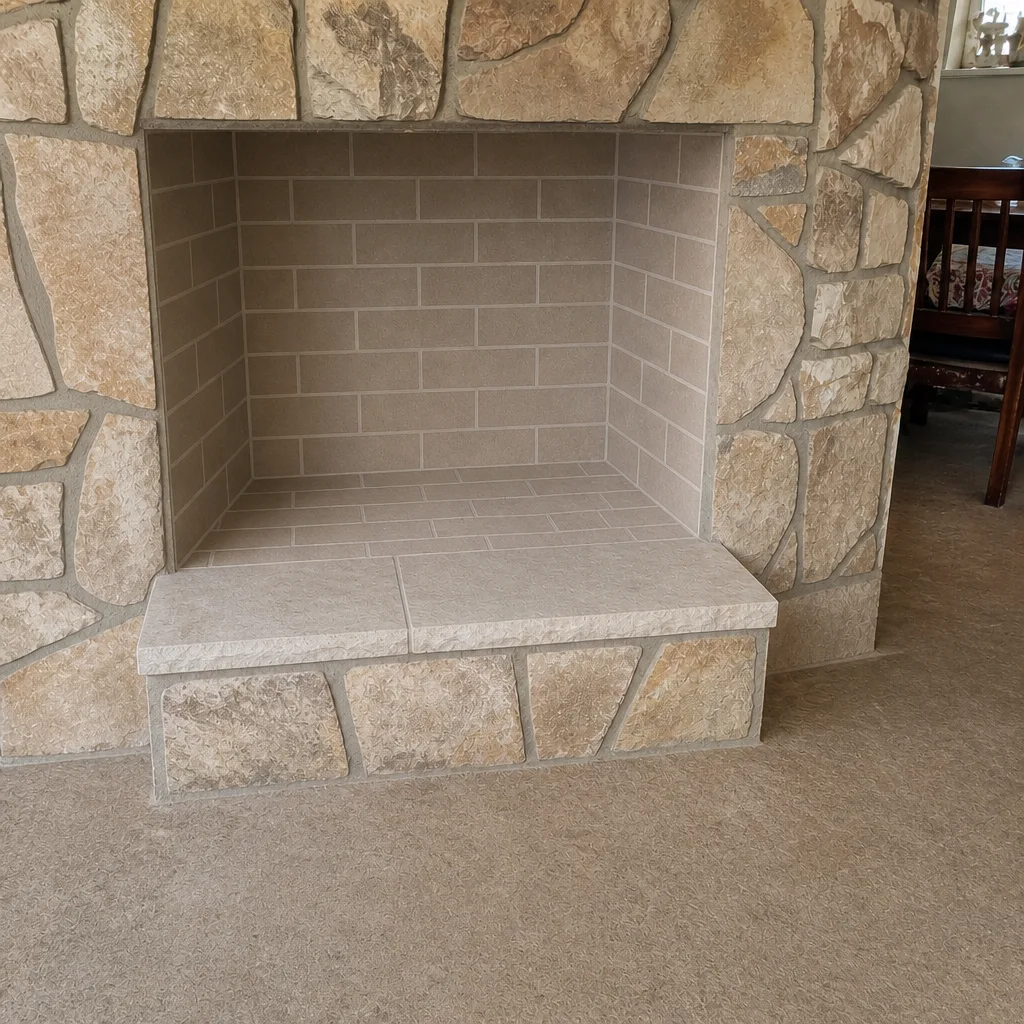 After
When to Call a Professional
Call a professional for any of the following: a suspected chimney fire (after 911), any smoke-back into the room, any CO alarm activation, any head or nausea symptoms that ease outdoors, a flue that drafts weakly or smells of soot, visible damage to the chimney cap or crown, or a firebox that has never been inspected in the home you’ve lived in. Also call if your wood-burning appliance has been unused for a full season or more – nests and soot falls happen in idle chimneys more than people expect. A chimney fire, a CO event, and a sudden blockage all need eyes on the flue, not just a fire put out.
Lionheart Chimney Sweep offers free estimates in Wichita Falls – call (855) 705-9859. We use DuraFlex liner systems and HeatShield resurfacing, sourced from professional trade suppliers including Olympia Chimney, not hardware-store alternatives. Our technicians have up to 15 years of experience. Camera inspection and photo report are included with every visit.
Frequently Asked Questions
You don’t, until the fire department clears the house and a professional inspects the flue. A chimney fire can smolder in creosote and reignite minutes to hours after it appears to be out. Evacuate, call 911, wait for clearance, then book an inspection before you light again.
No. Opening windows can worsen the pressure imbalance that pushed smoke into the room in the first place. Get everyone out of the room first, then let the fire die down before anyone investigates. Opening a window is a reasonable step after the fire is out and the room has cleared.
Nothing. CO is colorless and odorless, which is why the alarm matters so much. If you feel headache, dizziness, fatigue, or nausea in the house and the feelings ease when you step outside, leave the house and treat the fireplace as a suspect until it’s been inspected.
Hardware stores and fireplace retailers in Wichita Falls generally carry chimney fire suppressant logs. We’ll point you to what to ask for during a sweep visit if you want the right product the first time. It’s a first-response tool, not a cleaning substitute, so keep one near the firebox and replace it before it expires.
Most wood-burning chimneys should be swept once a year or after every cord of wood burned, whichever comes first. Gas inserts run cleaner but still need annual inspection. If your home is in a neighborhood with mature trees and you’ve seen birds or squirrels on the roof, an annual sweep is not a luxury – it’s the pre-season baseline.
Creosote accumulates with every fire, and above a certain thickness it burns hot and fast. That’s the fuel a chimney fire needs. Skipping a sweep doesn’t cause a fire on any given night, but it removes the margin of safety and the only inspection that would have caught a cracked liner, a nest, or a soot fall before it became a problem.
Yes, and it’s often the fire hazard homeowners forget. Our dryer vent cleaning is part of the same fire-safety work we do on the chimney. Lint buildup in a dryer vent is a leading appliance-related fire cause, and one call covers both.
We’re closed on Saturday. Call (855) 705-9859 and we’ll book you into Sunday. We answer 24/7. Fast dispatch from 7am to 7pm, Sunday through Friday.
The Bottom Line
Chimney emergencies don’t follow a maintenance schedule, and the first ten minutes decide how much damage gets done. Know the sequence: evacuate, call 911, close the damper, no water on the fire, then document before you clean. Know the CO symptoms and treat the fireplace as the source when symptoms ease outdoors and return inside. Know the sudden-blockage signs and get a camera inspection after every smoke event. Keep a real emergency kit near the firebox, understand what a suppressant log is and isn’t, and phone a chimney professional before the next fire. For Wichita Falls homeowners, that call is the difference between a flue fire that stays in the flue and one that doesn’t. Call (855) 705-9859 for a free estimate. We answer 24/7. Fast dispatch from 7am to 7pm, Sunday through Friday.
Written by the team at Lionheart Chimney Sweep.