
Last updated November 14, 2026
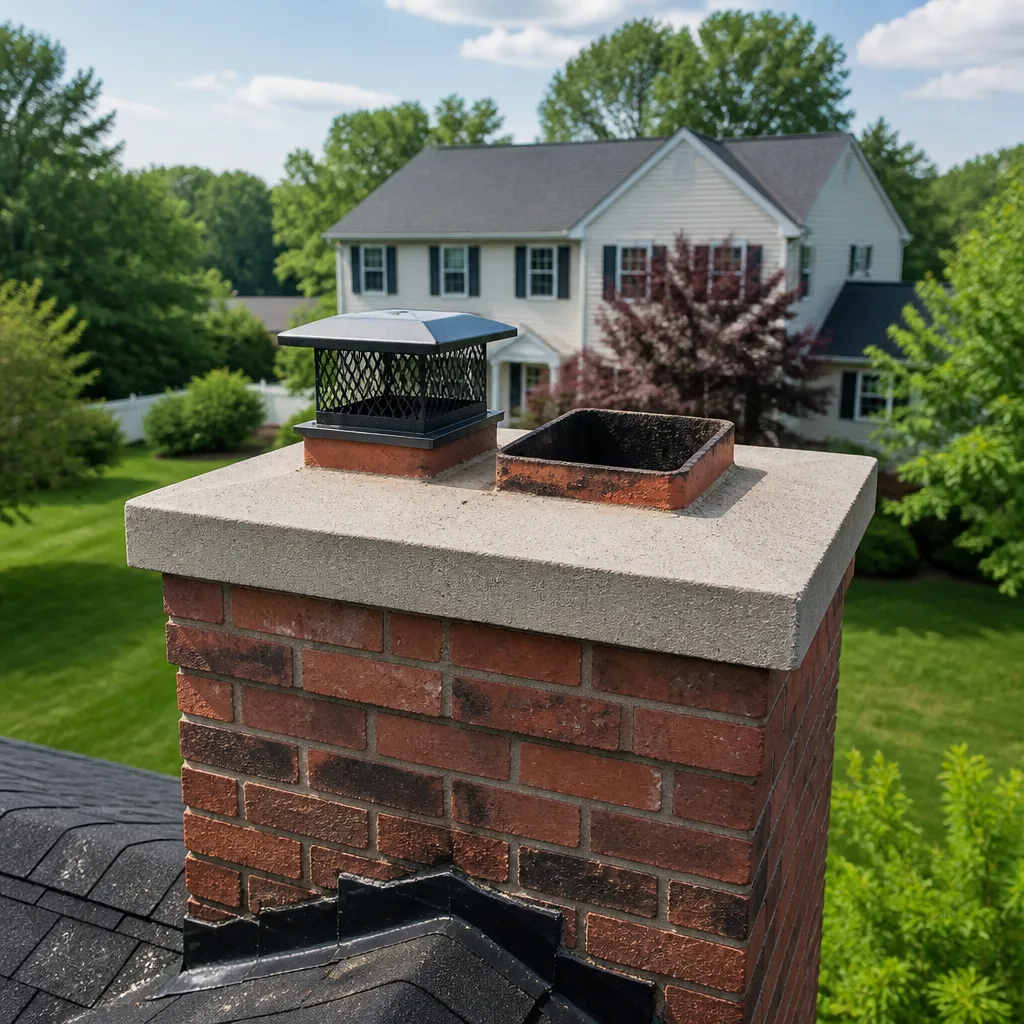 Sweep & inspection
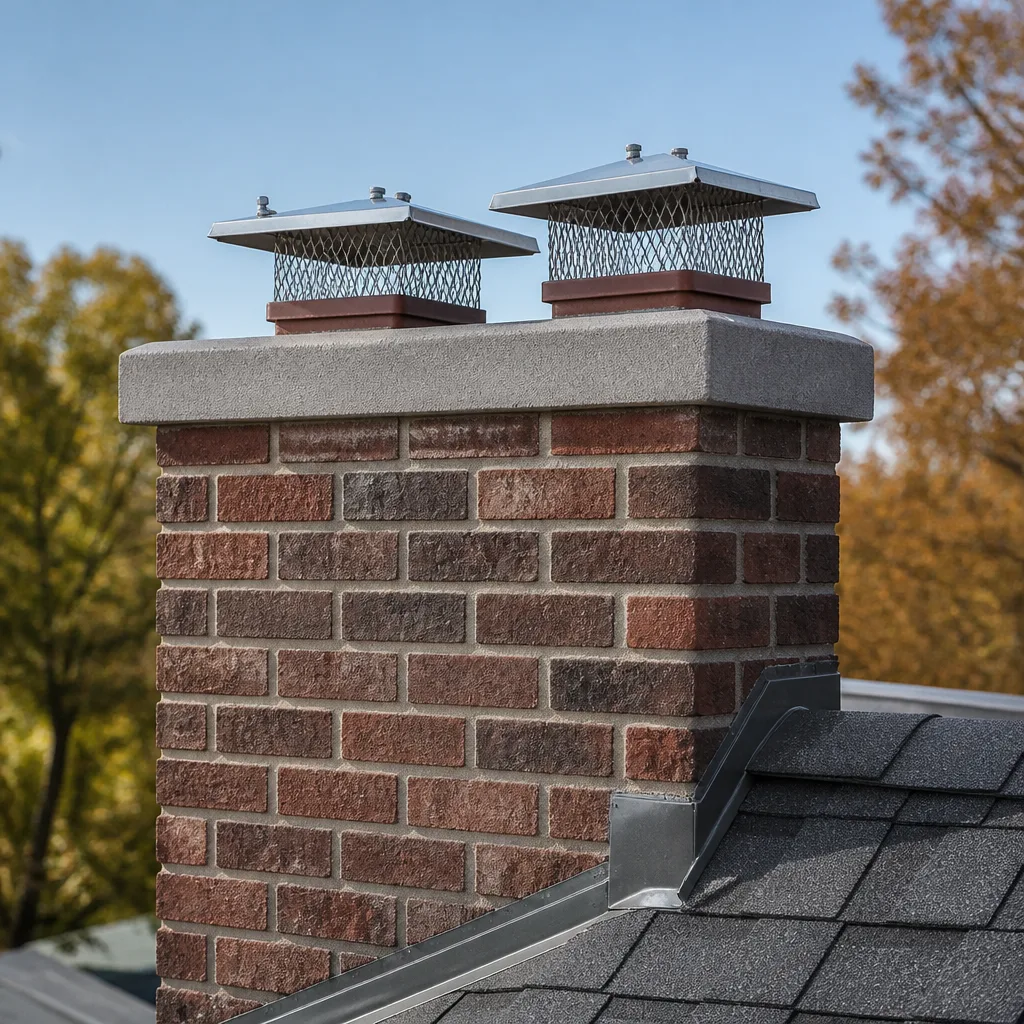 Caps & crowns
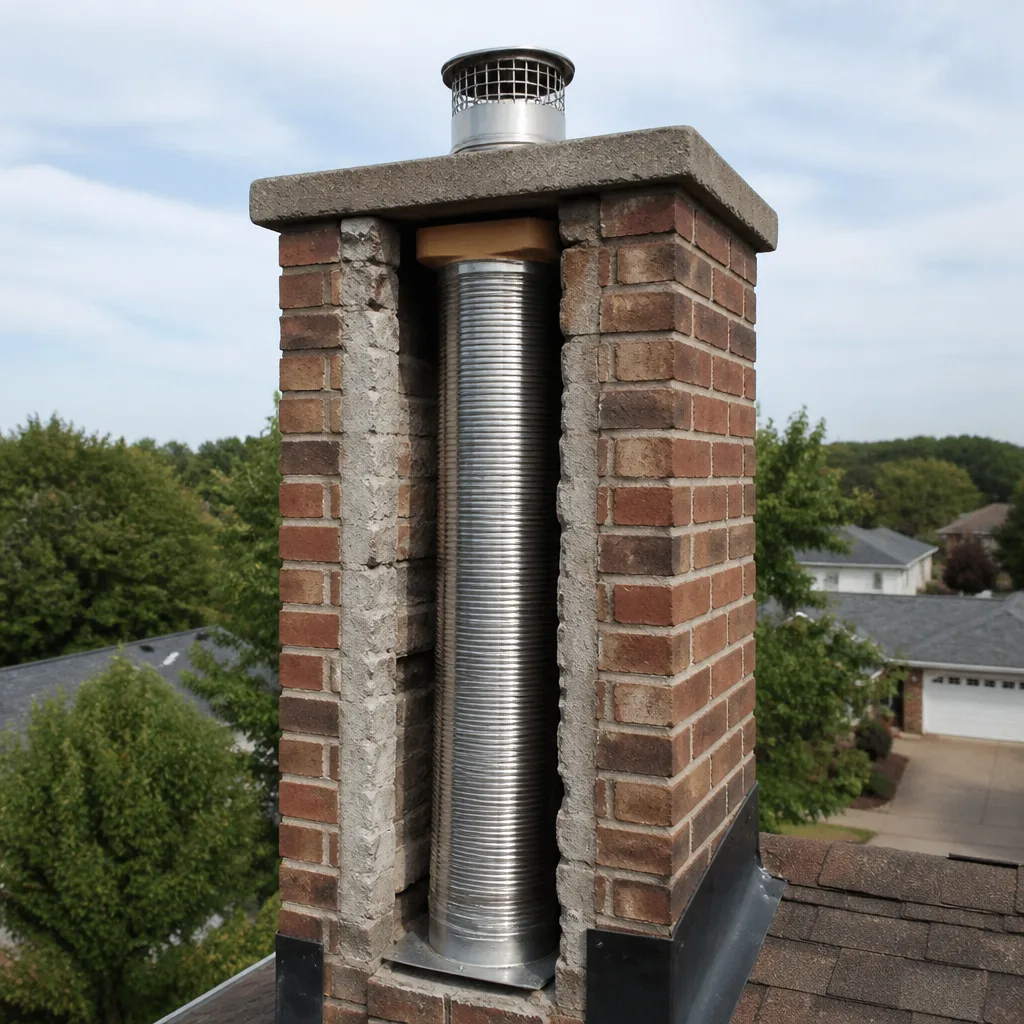 Flue relining
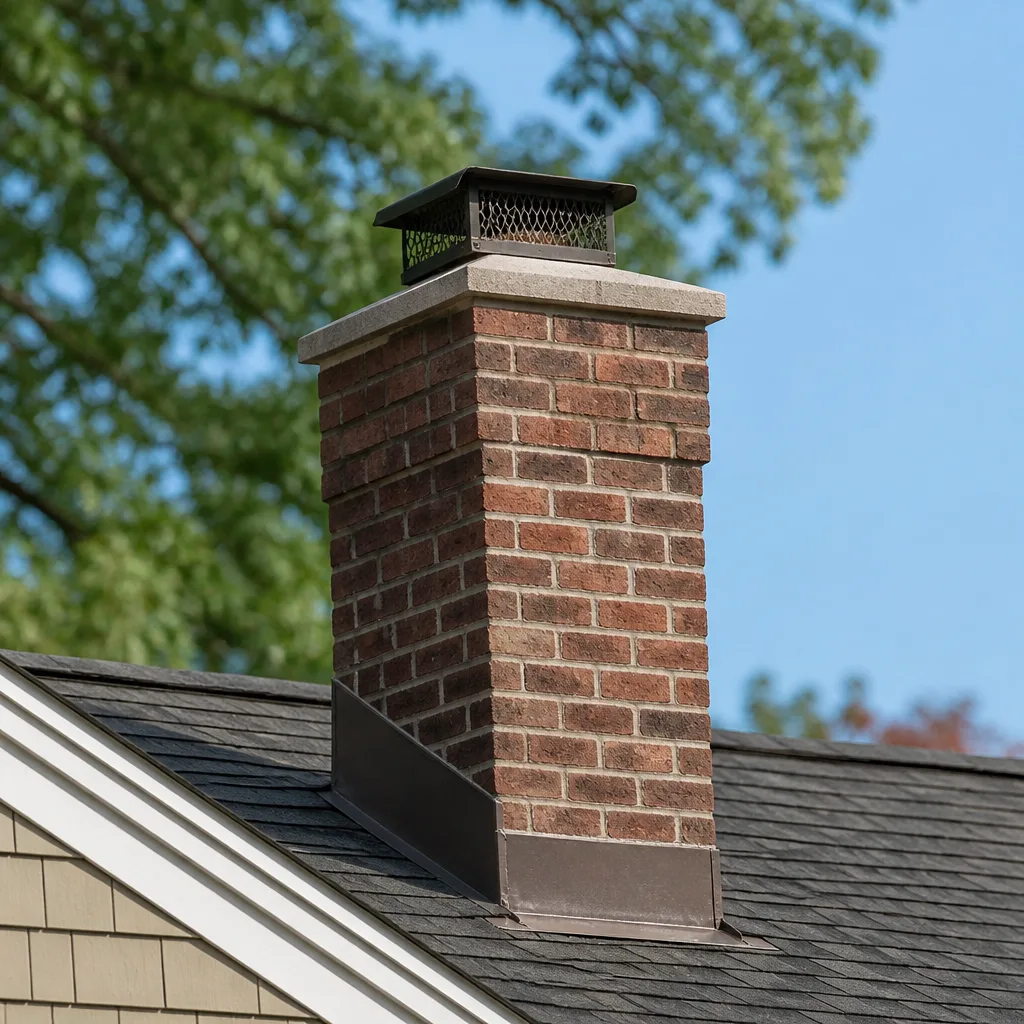 Masonry repair
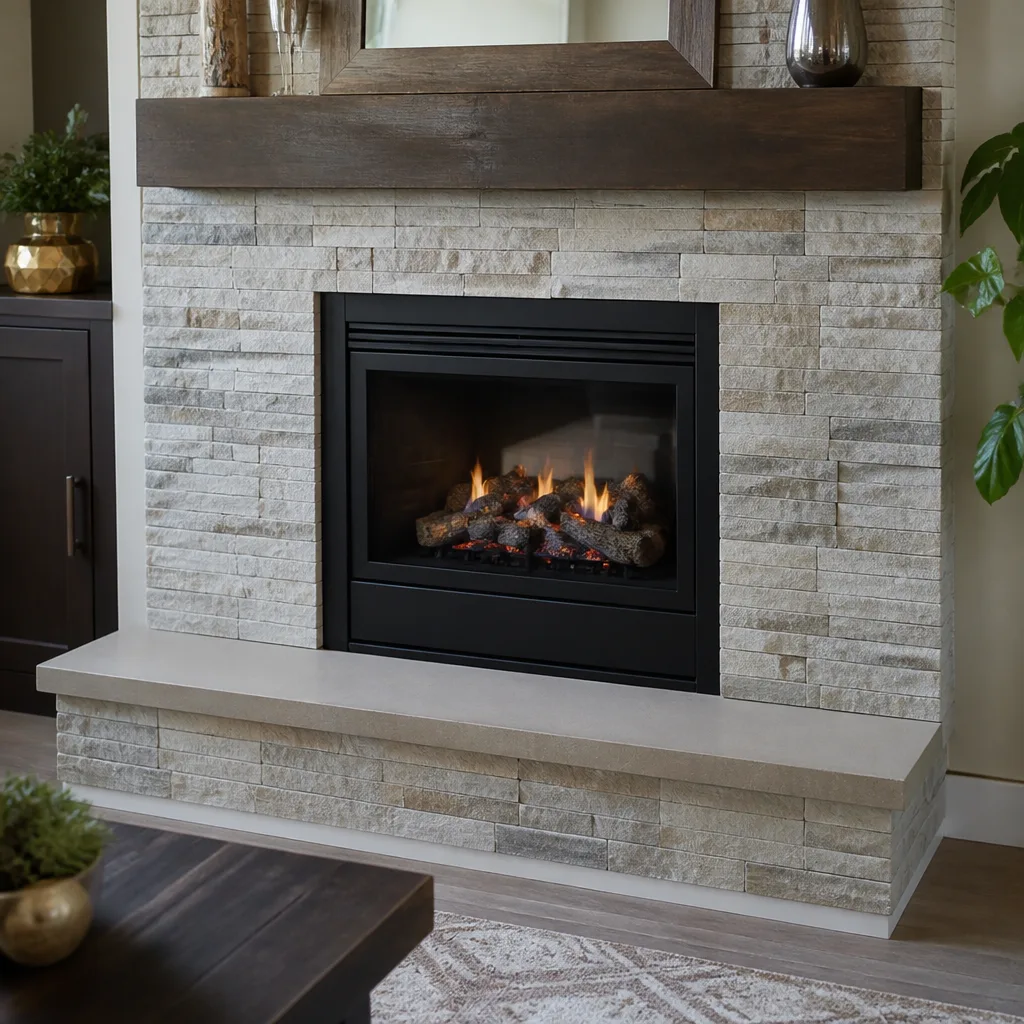 Gas fireplace service
Level 1 sweep and inspection to the NFPA 211 annual standard - flue, crown, cap, and flashing checked and photographed
Chimney sweep logs do not sweep chimneys. They loosen some creosote - which then falls where a brush and vacuum still have to collect it.
Choosing the Right Chimney Cleaning Brand: A Buyer’s Guide for Wichita Falls
Most homeowners in Wichita Falls pick a chimney company the same way they pick a plumber: they search, they scan the reviews, they go with the name that looks familiar. That’s understandable, and it’s also backwards. The name painted on the side of a truck tells you almost nothing about what happens when a technician finds a cracked tile liner or a colony of creosote packed into the smoke chamber. A national franchise with a polished website can arrive with a brush and a flashlight and leave the real problem sitting in your flue. A quiet local independent can arrive with a camera scope, stainless liner sections in the truck, and the training to fix what they find on the spot. This guide teaches you to judge a chimney company in Wichita Falls by capability instead of branding, so the safety of your home doesn’t depend on a marketing budget.
Quick Answer
The best chimney cleaning company in Wichita Falls, TX is the one that can do three things in a single visit: inspect with a camera, clean to a professional standard, and repair what the inspection uncovers using professional-grade materials. Brand recognition matters far less than equipment, certifications, and whether the technician standing in your living room can actually fix a cracked flue rather than handing the job to a stranger. Ask what they stock, what they’re trained to install, and whether they handle repairs in-house before you book.
Styles & brands we work with
- Sweep & inspection
- Caps & crowns
- Flue relining
- Masonry repair
- Gas fireplace service
Table of Contents
- Why capability beats branding in chimney service
- What should be in a chimney technician’s truck?
- National franchise vs. local independent: the structural difference
- Professional-grade liner, crown, and firebox materials explained
- How do you verify a chimney company’s real track record?
- The single-visit advantage: clean, inspect, repair under one roof
- How to evaluate a company: a step-by-step method
- The questions to ask before you book
Why capability beats branding in chimney service
A chimney company’s real value lives in the gap between what it can spot and what it can fix. Anyone with a ladder can run a brush down a flue. The work that actually protects a home in Wichita Falls happens when a technician notices a hairline crack in the flue tile, or a crown pulling away from the chimney top, or a firebox that’s been patched with the wrong compound, and then has both the authority and the parts to correct it before driving away. A brand name on a van doesn’t give you that. A stocked truck and a trained technician do.
We’ve built our service around this idea because we’ve seen the alternative. A homeowner books a sweep, the technician cleans and leaves a note that reads “liner needs evaluation,” and the homeowner spends the next two weeks trying to figure out who to call next. The safety problem sits unresolved. Chimney service in this trade has a name for that pattern: the referral loop. For a homeowner, breaking out of it means choosing a company on the front end that can close the loop on the back end.
That’s the first filter to apply when you’re researching any provider in Wichita Falls. Before you read a single review, look at what the company says it can do. Does it mention repair? Does it name the materials it installs? Does it explain how a sweep and a repair fit together? A company worth your time will describe its capabilities in concrete terms, not just promise you a clean chimney and a smile.
Fire safety isn’t a vague concern here. A blocked or cracked flue doesn’t warn you before it becomes dangerous. The invisible failure mode is carbon monoxide moving back into the house instead of up and out. The visible one is a chimney fire, and creosote deposits are the fuel. Capability, in this trade, is the difference between a company that spots the hazard and one that doesn’t look closely enough to see it.
What should be in a chimney technician’s truck?
A professional chimney visit is built on equipment most homeowners never see. When a technician is serious about inspection and repair, the truck stock tells you. Here’s what a capable provider should be carrying when they pull up to a home anywhere in Wichita Falls, whether that’s near Sikes Senter, out toward Sheppard Air Force Base, or off McNiel Avenue.
- A camera scope for flue inspection. Not every job needs it, but the capability has to be on board. Camera inspection lets the technician see the interior of the flue from the firebox all the way to the termination, and it’s the only way to spot a hairline crack in a tile section that’s four feet above the damper.
- A proper chimney brush set sized to the flue. Poly or wire, matched to the liner type. Using the wrong brush on a stainless liner or a HeatShield-resurfaced flue can scratch or damage it.
- A high-powered shop vacuum rated for fine ash. Not a household vacuum. Creosote and ash are difficult on standard filtration, and a professional unit captures them without exhausting them back into your living room.
- Stainless flexible liner sections. If a company can install a DuraFlex liner, they carry the components. If they can’t, they don’t.
- Crown coatings and firebox repair compounds. The professional-grade equivalents of what a box store sells. Materials that hold up under thermal cycling and Chicago-style temperature swings. Wichita Falls doesn’t get Chicago winters, but a Wichita Falls fall and spring still cycle a chimney top hundreds of degrees over the course of a burn season.
- Sealants and mortar suited to a chimney crown. A crown coat has to flex with the masonry and stay watertight through summer heat and irrigation spray. Standard caulk fails within a season.
- A trained eye and a written report. No tool substitutes for fieldwork, and no visit should end without a clear explanation of what the technician found.
An organization that only carries a brush and a flashlight can still be a legitimate light-duty sweep. But when they find a problem, they can’t fix it. The homeowner ends up with a report and a phone number to call someone else. The visit stops short of the work the chimney actually needed.
National franchise vs. local independent: the structural difference
National franchise chimney companies operate in Wichita Falls under recognizable names, and they’re not automatically better or worse than local independents. The structural difference is what happens when a technician discovers a repair during a sweep. It’s the part of the visit that decides whether your chimney is actually safe by the time the truck leaves the driveway.
A franchise model often separates the two functions. The technician who cleans is not the technician who repairs. Repairs get routed to a subcontractor or a corporate-approved installer, and the homeowner waits weeks for the second visit. Not because anyone is lazy, but because the business is structured around a dispatch center rather than the technician standing in your living room. That structural split is the single most common reason a safety issue gets flagged and then forgotten.
A local independent with repair capability collapses that gap. The same technician who cleaned the flue also looked at it with a camera and can install the liner or coat the crown before leaving. There’s no handoff, no second appointment, no window for the problem to fall through a crack between vendors. We repair what we find, in the same visit that found it, for exactly this reason.
Local accountability matters too, and not in the vague “we care about the community” sense that every company claims. It matters because a local provider has to face the homeowner, the neighbor down the street, and the realtor who referred them. A call center in another state is not accountable to anybody in Wichita Falls in any meaningful way. A local provider who does right by a chimney on Faith Road will hear about it if they don’t. That’s not a marketing slogan, it’s the mechanics of how reputation works in a city this size.
Professional-grade liner, crown, and firebox materials explained
Materials are the part of a chimney bid homeowners can’t easily judge, so let’s make it plainer. “We use professional-grade products” means specific things in three areas: liner systems, crown coatings, and firebox repair compounds. Here’s what the difference looks like in each, and what to ask about.
Liner systems
A stainless flexible liner is what protects a flue that’s cracked or unlined. The material quality matters because it’s the barrier between exhaust gases and the combustible framing of your house. Professional-grade liner systems like DuraFlex are engineered, tested, and listed for the application, and they’re installed by technicians who understand how to size the liner to the appliance and terminate it correctly at the top and bottom. A consumer or entry-level liner sold through a big-box store may claim the same spec sheet, but it hasn’t been tested through the same QA path and isn’t part of a system your installer has worked with hundreds of times.
The right question to ask isn’t “do you use DuraFlex?” It’s “what liner are you going to install in my chimney, why, and can you show me the product?” A company that can answer that clearly is telling you it has real sourcing and real training. One that deflects is telling you something too.
Crown coatings
The chimney crown is the concrete cap at the top that sheds water away from the masonry. When it cracks, water gets into the chimney body, and the damage compounds from there. A professional-grade crown coating is a flexible, elastomeric product designed to bridge hairline cracks and move with the masonry. Consumer-level alternatives are typically rigid and fail at the first thermal cycle. Professional materials are also sourced from chimney trade suppliers, not from a big-box shelf.
Firebox repair compounds
The firebox takes more direct heat than any other part of the chimney. When the mortar joints erode, the repair has to use a refractory product rated for the temperatures involved. A hardware-store mortar mix will crack and fall apart. A proper firebox compound, applied by a trained technician, holds. This is one of the most commonly skipped repairs in the trade because the wrong material is faster and cheaper in the moment.
We install DuraFlex liner systems and we carry HeatShield flue resurfacing for deteriorating tile liners. We also source Fry, Famco, and Copperfield components through professional chimney trade suppliers, the same vendors that supply certified chimney professionals nationwide. We mention those names not because a brand endorsement means anything, but because the sourcing tells you what kind of company we are. We buy from trade distributors, not from a home-improvement shelf.
How do you verify a chimney company’s real track record?
Online reviews tell you that a company showed up, was friendly, and cleaned up after itself. They rarely tell you whether the company installed a liner correctly three years ago and whether that liner is still doing its job. For a safety-critical trade, you have to verify deeper than a review score. Here’s what to ask for when you’re vetting a chimney company in Wichita Falls.
- Ask for references specific to repair work, not just cleaning. Cleaning references are easy to give. Repair references are the real test. A company that can put you in touch with homeowners who had a liner, crown, or firebox repair done will do so willingly.
- Ask what the technician will actually do on the visit. A clear answer includes a camera inspection, a written summary of findings, and a conversation about any repair. A vague answer is a warning sign.
- Ask what materials will be used and who supplies them. “Professional-grade” isn’t a material name. A real company can name the products and the distributor.
- Ask whether the company does repair and cleaning together. If repair is subcontracted, the second appointment might never happen, and the safety issue stays unresolved.
- Ask what happens after the visit. Are you getting a written report? Photos? A clear recommendation? A free estimate for anything found? All of these should be included.
- Ask if the company also cleans dryer vents. Not every provider offers this. It tells you whether their fire-safety scope is narrow or full-picture. Dryer vent lint is a leading cause of home fires, and the same technician who checks your chimney can also check the vent.
None of these questions require a licensed credential to answer, they just require a company that actually performs the work. The provider that does, will answer them plainly. The one that subcontracted repair and cleans with a flashlight, won’t.
The single-visit advantage: clean, inspect, repair under one roof
Here’s a scenario that plays out in Wichita Falls every burn season. A homeowner books a sweep. The technician cleans the flue, notices a cracked liner tile, and tells the homeowner it needs to be addressed. The homeowner books the repair with a separate company, then waits. The second company arrives six weeks later, does its own inspection, and quotes a repair that costs more than expected. The homeowner hesitates. Burn season closes. The following fall, the same problem is still there, only worse.
Each step in that chain is reasonable on its own. The failure is structural. Safety issues cascade when they’re handed between companies, and the second, third, and fourth companies in the chain each add their own scheduling, their own inspection, their own quote, and their own delay. The homeowner takes on more logistical burden than the original repair required, and the chimney keeps deteriorating in the meantime.
The single-visit model collapses all of that. When one company cleans, inspects, and repairs, the sequence becomes:
- The technician sweeps the flue and inspects it with a camera.
- The technician shows the homeowner what the camera saw and explains what needs to be done.
- If the issue can be resolved on the spot, the technician does it using the parts and materials already on the truck.
- If the issue requires a scheduled follow-up, it’s booked as part of the same relationship with the same company that already did the inspection.
- The homeowner has one point of accountability for the whole job.
That structure removes coordination failure as a variable. The homeowner doesn’t have to connect dots between contractors, doesn’t lose track of a flagged repair, doesn’t end up with two companies each claiming the other should have caught something. In the fire-safety trade, fewer handoffs means fewer opportunities for a hazard to sit unresolved.
The scope matters too. Our work covers three service lines under one company: chimney sweep, chimney repair, and dryer vent cleaning. Same technicians, same standards, same accountability. One call covers your chimney and your dryer vent, which matters because both are fire-safety points that homeowners often treat separately.
How to evaluate a company: a step-by-step method
When you’re choosing a chimney company in Wichita Falls, this is the sequence we’d suggest following. It works whether you’re calling us or comparing any other provider in the area.
- Start with what the company says it does, not what it says it is. Look at their website and read past the taglines. Do they name the services and the materials? Can they describe what a sweep involves? Capability lists are the honest part of a company’s marketing.
- Check that they do repair in-house. Call and ask directly. “If you find a cracked liner, can you fix it, or do I need to call someone else?” The answer should be immediate and clear.
- Ask what’s in the truck. Camera scope, professional-grade materials, adequate vacuum, proper brush set. A company that carries the tools does the work.
- Ask for references on repair, not just cleaning. Real repair references separate a company that cleans from one that also fixes.
- Ask what the visit includes. Camera inspection, photo report, written findings, free estimate for anything found. If any of those are missing, ask why.
- Verify the dryer vent side. If the company only cleans chimneys, you’ll still need a separate visit for the vent. If they cover both, you’ve eliminated a call.
- Compare on capability, not price alone. A low quote for a sweep that doesn’t include inspection isn’t a bargain. It’s a missed opportunity to catch a problem before it becomes expensive.
Run this sequence on any two or three companies in the area, and a clear winner will emerge. It usually isn’t the flashiest brand name. It’s the provider that can actually stand behind the work.
The questions to ask before you book
Here’s the short version to keep on your phone when you’re calling around. Every question is fair, none of them are trick questions, and any company that can do the work will welcome all of them.
- What does a sweep visit include, specifically? Will I get a camera inspection and a written report?
- Do you perform chimney repairs in-house, or do you subcontract them?
- What liner system do you install, and what trade supplier do you source from?
- Are you familiar with HeatShield resurfacing for tile liner deterioration?
- What firebox and crown repair materials do you use?
- Can you give me references for repair work specifically, not just cleaning?
- Do you also clean dryer vents?
- What does the estimate process look like, and is it free?
Our technicians have up to 15 years of experience in this work, and the answers we give to each of these questions come from hands-on knowledge rather than a script. We use DuraFlex liner systems and HeatShield flue resurfacing, source components from Olympia Chimney Supply and Copperfield, and carry Famco and Gelco ventilation components so a sweep can address the whole system, from firebox cap to exterior termination. The Lionheart name is our shorthand for the benchmark we hold the work to: we fix what we find and we stand behind it.
Common Mistakes to Avoid
- Hiring on reviews alone. Reviews capture whether a technician showed up on time and cleaned up afterward. They don’t tell you whether that same company can install a proper liner when your flue needs one. Ask about repair capability separately from cleaning feedback.
- Assuming a familiar brand name means a better job. A national franchise in Wichita Falls may subcontract repair to a local independent anyway. You’re paying for the brand without getting the local accountability. Read the fine print on who actually does the work.
- Booking a sweep that doesn’t include inspection. A cleaning without a camera inspection is a housekeeping service, not a safety check. The whole point of a chimney visit is catching what a brush can’t see, and that requires a scope.
- Accepting a verbal “your chimney is fine” without a report. A professional visit ends with written findings and, usually, photos. A verbal all-clear doesn’t give you a record for next season, and it doesn’t let you verify the assessment.
- Letting a flagged repair sit because you don’t have a repair company lined up. This is the most common coordination failure we see. A cracked liner flagged in October is often still cracked the following spring because the homeowner couldn’t line up the second vendor. Ask about in-house repair at the point of booking.
- Skipping the dryer vent because it isn’t the chimney. If you’re calling a chimney company anyway, ask whether they handle the vent. Lint accumulation in a dryer vent is a fire hazard in its own right, and the visit is already happening.
- Choosing the cheapest sweep quote without asking what’s included. A low price that doesn’t cover inspection, a report, or a repair estimate is not a cheaper visit. It’s a shorter one that leaves you with less information.
See the difference
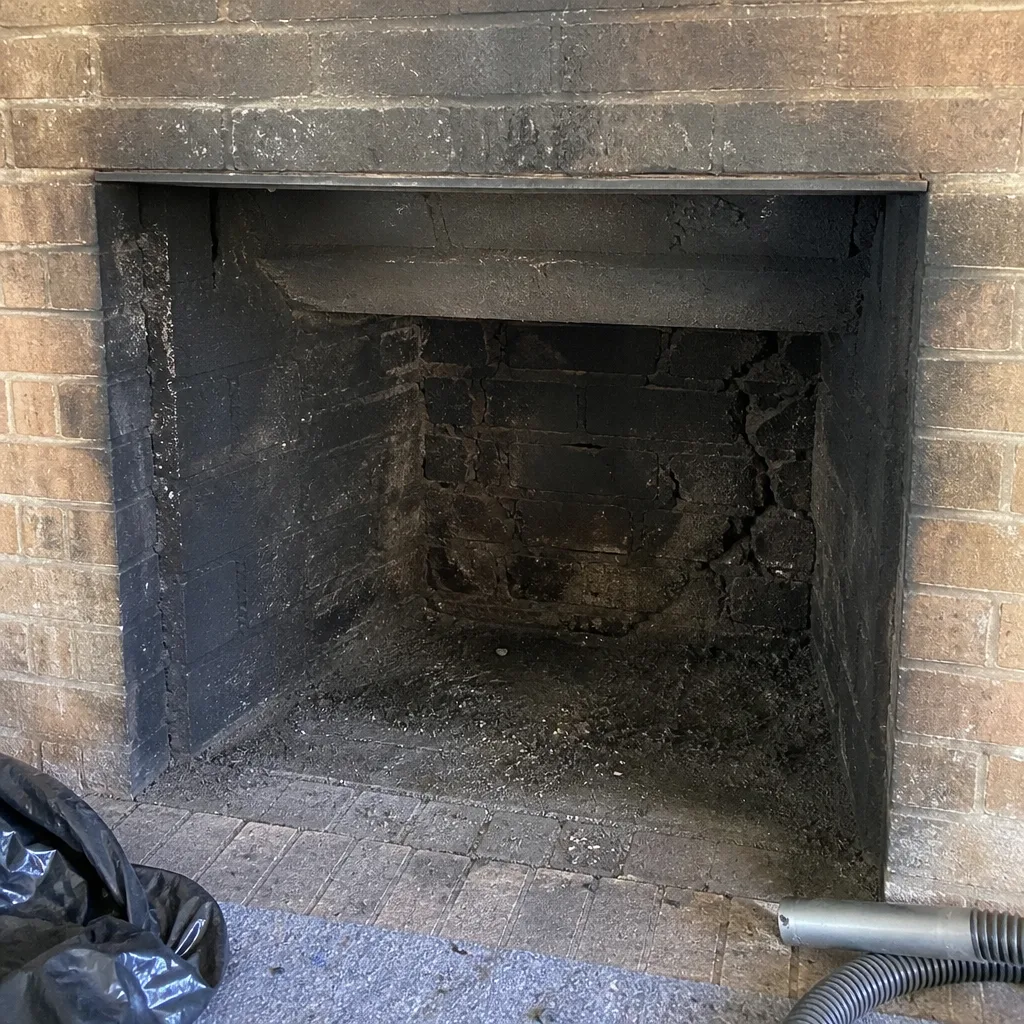 Before
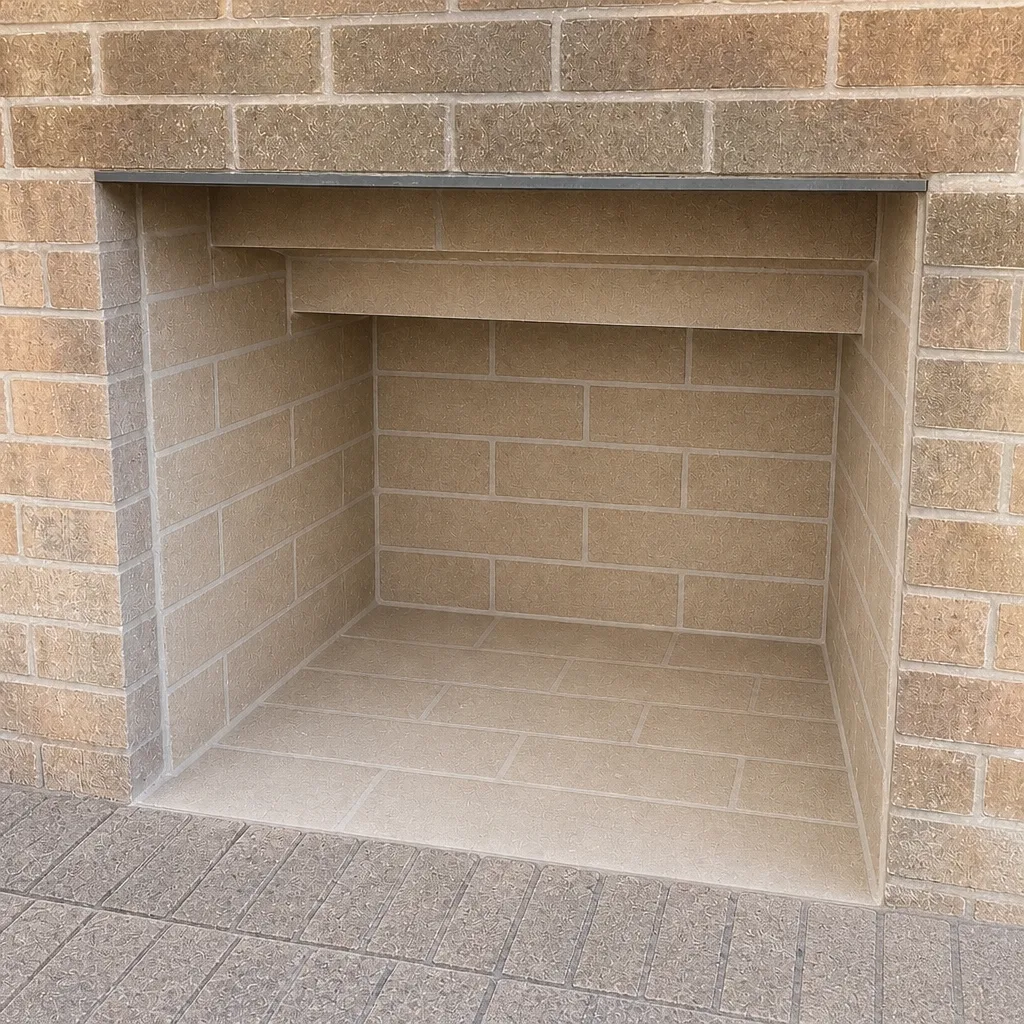 After
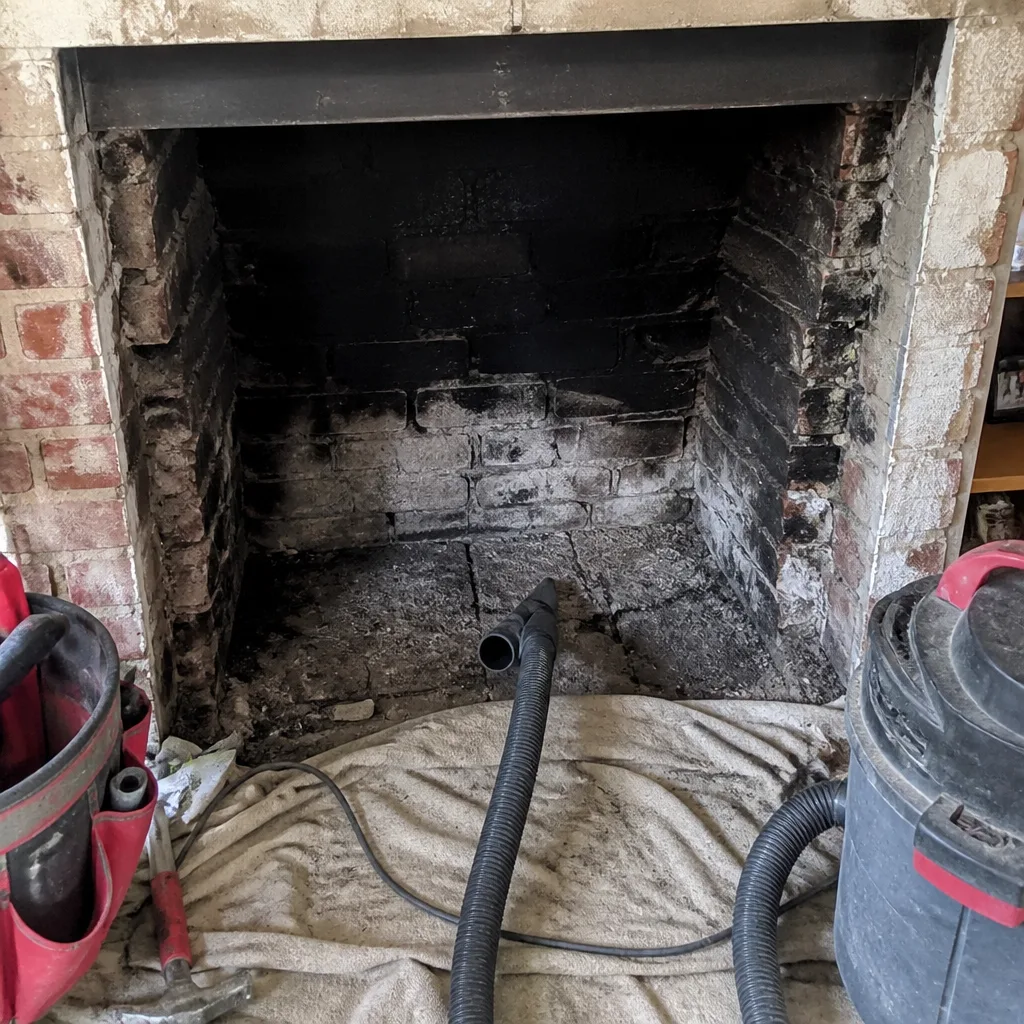 Before
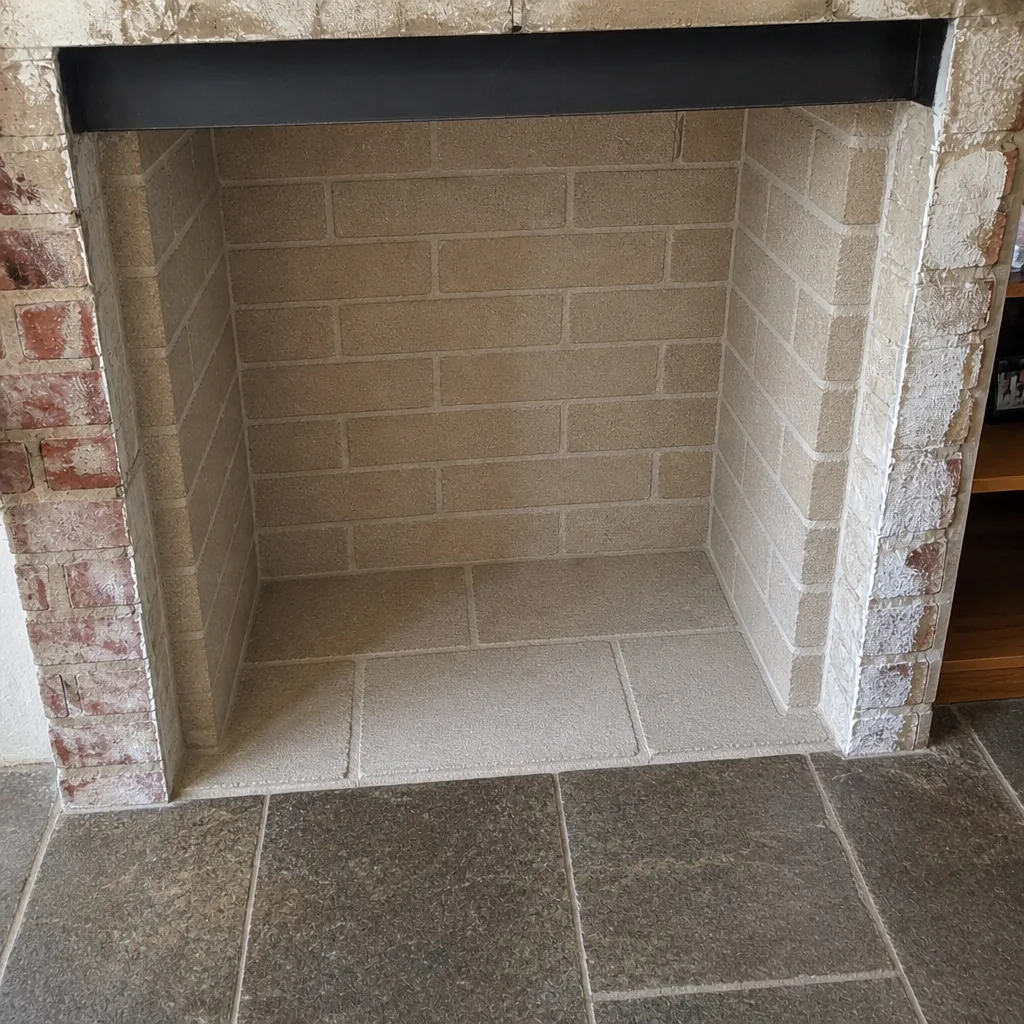 After
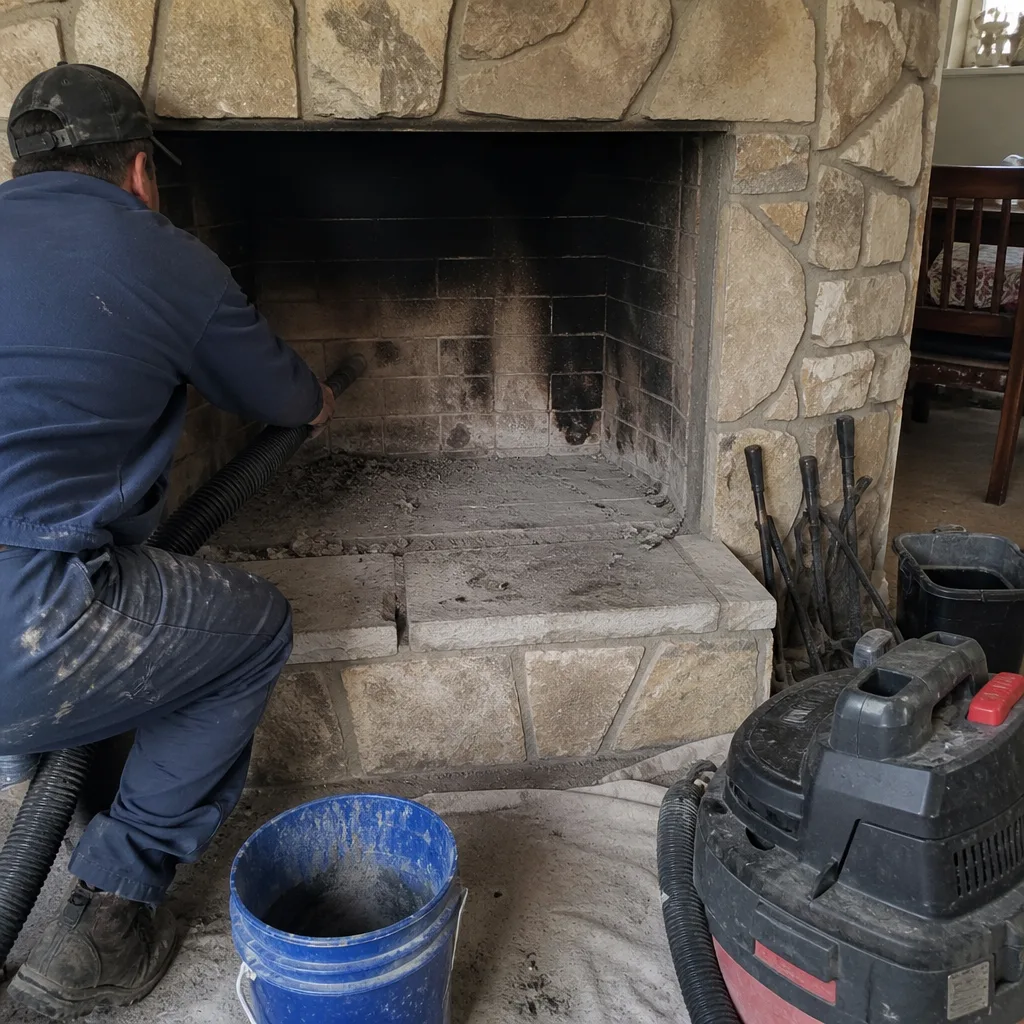 Before
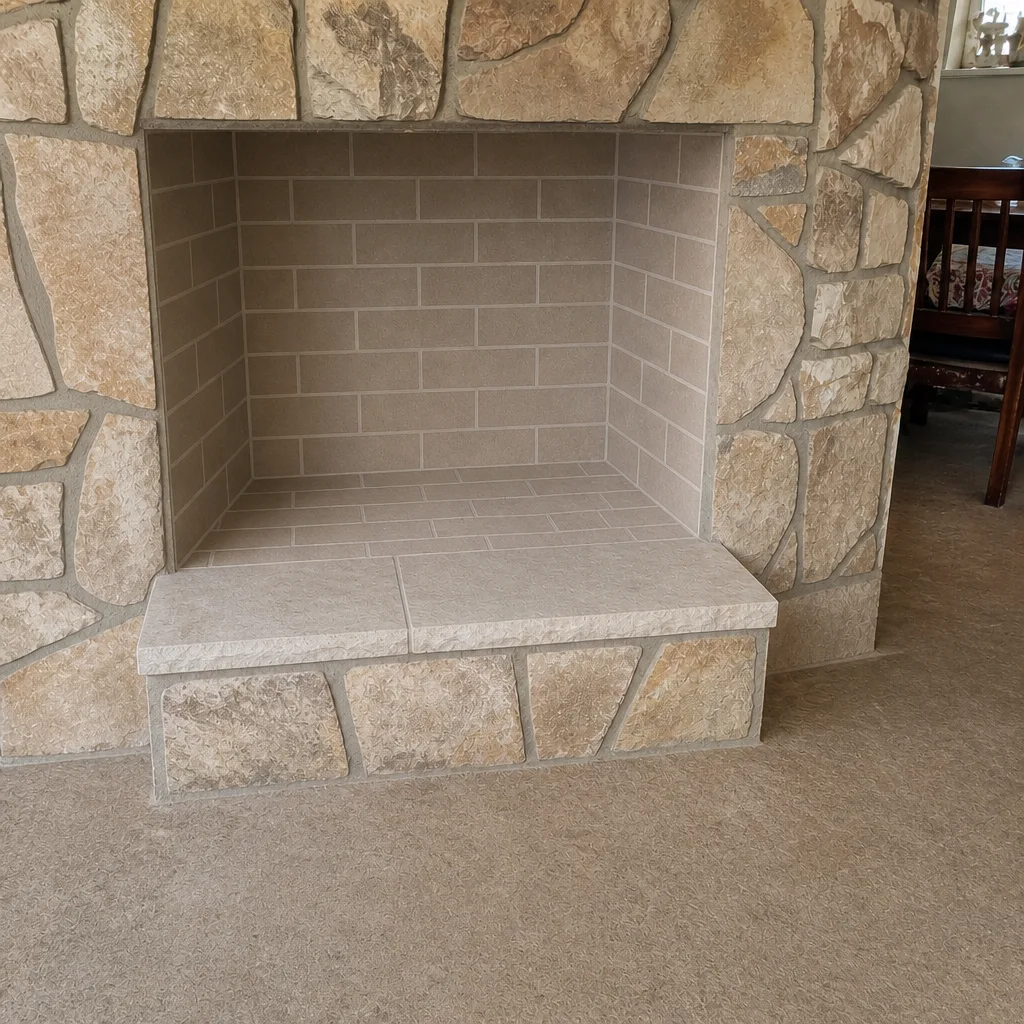 After
When to Call a Professional
Some chimney concerns are housekeeping, and some are safety. Call a professional when you smell a strong creosote odor inside the house after a fire, when smoke rolls back into the room rather than going up the flue, when you see visible damage to the firebox mortar bricks, or when it’s been more than a season since your last inspection. Call us sooner if you hear a loud, roaring sound during a fire, see puffs of smoke from the chimney top that don’t look like normal exhaust, or find creosote accumulating heavily in the firebox. Don’t clean a flue yourself if you don’t have professional equipment; the creosote deposits and the physical access make it a job for trained hands. Lionheart Chimney Sweep offers free estimates in Wichita Falls. Call (855) 705-9859. We answer 24/7. Fast dispatch from 7am to 7pm, Sunday through Friday.
Frequently Asked Questions
Once a year is the standard for a home that burns wood, and more often if you burn frequently through the winter or use a wood stove as a primary heat source. Wichita Falls burn seasons are shorter than in colder climates, but the creosote that accumulates during any given season is the same hazard, so annual inspection remains the right cadence. Call (855) 705-9859 to book a sweep and inspection before the burn season starts.
A liner is needed when the existing clay tile is cracked, spalling, or missing altogether, and a camera inspection is the only honest way to establish that. If a company recommends a liner, ask to see the camera footage and the photos from inside the flue. A professional will show you the evidence. Call (855) 705-9859 for a free estimate on liner evaluation.
Creosote keeps building up, and the risk of a chimney fire increases with every burn. The invisible risk is carbon monoxide moving back into the house through a compromised flue. Neither failure announces itself. The whole point of an annual visit is catching what you can’t see. Call (855) 705-9859 to schedule a sweep before another season passes.
Yes, if the company has the capability and the parts. When cleaning, inspection, and repair are all performed under one roof, the technician who spots the problem can address it on the same visit or book a clear follow-up. That’s a meaningful advantage over splitting the work between a sweeper and a separate repair contractor. Call (855) 705-9859 for a free estimate and a clear explanation of what your chimney needs.
Pricing is set per job by the written estimate, and it depends on the flue length, access, and whether inspection or repair is included. We don’t publish a flat rate because a fair estimate depends on the chimney. Ask for a free written estimate before you book, and hold the company to that written price. Call (855) 705-9859 for yours.
Because both are fire-safety points in the house, and a company set up to evaluate one can evaluate the other on the same visit. Dryer vent lint is a leading cause of appliance-related home fires, and the work to clean it uses similar techniques to chimney sweeping. One call covers your chimney and your dryer vent. Call (855) 705-9859 to book both.
Yes, plan to be there. A professional visit includes a conversation about what the technician found and what the camera showed, and that conversation is more useful in person than in a written note. Book a time that lets you be on site for the inspection and the summary. Call (855) 705-9859 to schedule.
The Bottom Line
Chimney service quality in Wichita Falls is determined by what a company can actually do, not by the familiarity of the name on the truck. Judge a provider on three things: whether it carries a camera scope and professional-grade materials, whether its technicians are trained to install the products they recommend, and whether it can repair what the sweep uncovers before the visit ends. National franchises and local independents both deserve the same test, and the answer usually reveals which one is a cleaning service and which is a fire-safety specialist. A blocked or cracked flue doesn’t warn you before it becomes dangerous, so the company you hire should be able to close that gap in a single visit. Evaluate capability, ask the questions, and expect a written report. Lionheart Chimney Sweep is here to serve homeowners throughout Wichita Falls with chimney sweeping, chimney repair, and dryer vent cleaning under one roof. If you’re ready to book a sweep or get an evaluation of a chimney you’re not sure about, call (855) 705-9859 for a free estimate. We answer 24/7. Fast dispatch from 7am to 7pm, Sunday through Friday.
You can also review our Lionheart Chimney Sweep service overview to see the full range of what we do.
Written by the team at Lionheart Chimney Sweep.